Section 106 Sewer Connection: What It Is and the Surveys You Need
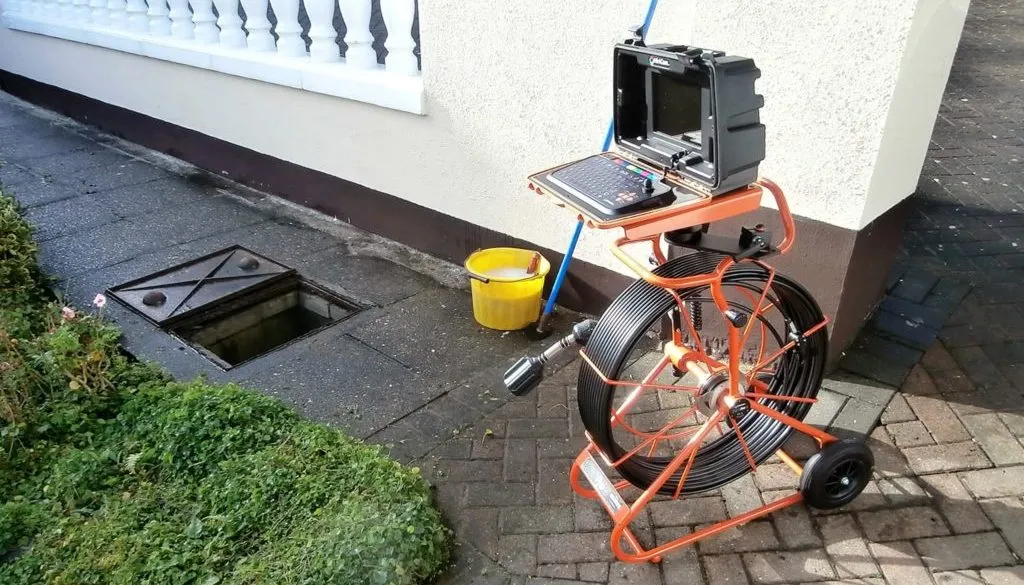
A section 106 sewer connection is the water company's consent to join a new drain to the public sewer. Here is how it differs from the planning agreement with the same number, when you need one, and which surveys to do before you apply.
A section 106 sewer connection is the water company's consent to connect a new drain or private sewer to the public sewer, under section 106 of the Water Industry Act 1991. You give notice and get consent before any work on the connection starts. The application goes more smoothly when you already know where the sewer is, what state it is in, how deep it runs and whether your new drain can fall to it, and that evidence comes from drain tracing, a CCTV survey and a level survey.
What is a section 106 sewer connection?
It is the legal right, and the application process, for the owner or occupier of a property to connect their drain or private sewer to a public sewer. You have to give the sewerage undertaker notice first, which across most of London means Thames Water, and it can only refuse on limited grounds.
The Act gives the water company 21 days from your notice to refuse. It can do so if the way the drain is built, or its condition, does not meet the standards it reasonably requires, or if the connection would harm its sewerage system. There are also fixed rules about what goes where:
- Foul water must not be discharged into a sewer provided only for surface water.
- Surface water may only go into a foul-only sewer with the water company's approval.
- Trade effluent from business premises needs a separate trade effluent consent. A section 106 consent does not cover it.
Each water company has its own forms, fees and processing times for this, and they change. Check the current ones with the company before you plan a start date.
Is it the same as a planning section 106 agreement?
No. A planning section 106 agreement is made under the Town and Country Planning Act 1990 between a developer and the local planning authority, usually covering things like affordable housing or financial contributions. It has nothing to do with sewers, and signing one gives you no right to connect to anything.
A development can need both, and several other numbered sewer approvals can come up on the same job. This is how they fit together:
| Approval | Law | What it is for | Who you deal with |
|---|---|---|---|
| Section 106 sewer connection | Water Industry Act 1991 | Connecting a drain or private sewer to a public sewer | Water company |
| Section 104 adoption agreement | Water Industry Act 1991 | New sewers built to be handed over to the water company | Water company |
| Section 185 diversion | Water Industry Act 1991 | Moving a public sewer out of the way of building work | Water company |
| Section 98 requisition | Water Industry Act 1991 | Asking the water company to lay a new public sewer where there is none | Water company |
| Section 106 planning agreement | Town and Country Planning Act 1990 | Planning obligations attached to a permission | Local planning authority |
| Building regulations (Part H) | Building Regulations 2010 | How new drainage is designed, built and tested | Building control |
Building control approval is needed for new drainage whether or not a sewer connection is involved, and the water company's consent does not replace it.
When do you need a section 106 connection?
You need one whenever a new drain or private sewer will join a public sewer: a new house, a plot sold off a garden, a conversion into flats with its own new outfall, a new commercial unit, or moving an existing connection to a different point on the sewer.
Watch for the shared pipe. In October 2011 most shared drains and private sewers in England, the pipes serving more than one property, were transferred to the water companies and became public sewers. If the pipe you want to join also carries your neighbours' waste, it is probably a public sewer now, and the water company will usually treat joining it as a new connection.
If you are only extending your own existing drain within your own property, for example a new bathroom or kitchen feeding into your existing inspection chamber, you are not making a new connection to the public sewer. You still need building control, and if you are building close to a public sewer you may need a build over agreement instead.
Which surveys should you do before applying?
The surveys answer three questions: where exactly the sewer is, whether it is in a fit state to connect into, and whether your new drain can reach it with a proper fall.
- Where the sewer is. Sewer records show the approximate position of public sewers, but they are not always accurate, and many former private sewers are not on them at all. Drain and sewer tracing uses a camera with a sonde transmitter to locate the pipe from the surface and mark its line and depth.
- What state it is in. A CCTV survey of the sewer at the proposed connection point records its size, material and condition, and shows any existing junctions you might be able to use instead of breaking in. Our guide to how a sewer CCTV survey differs from a drain survey explains what it covers and the coding used.
- Whether your drain can fall to it. A level survey records cover levels and invert levels, the level of the bottom of the pipe, so the designer can check that the new drain has enough fall to reach the sewer by gravity. Our explainer on drainage level surveys, invert levels and falls covers what is measured.
Levels are where London jobs most often come unstuck. A basement flat or a lower ground floor extension can sit below the sewer. If the lowest fitting cannot drain by gravity, the scheme needs a pumped connection, and that changes both the design and what you tell the water company.
What does the application usually ask for?
Most water companies ask for a site plan showing the route of the new drain and the connection point, the pipe size and material, whether the flow is foul water, surface water or both, how many properties or what use it will serve, and how the connection will be made.
Surface water gets extra scrutiny. Building regulations set a preferred order for getting rid of rainwater: into the ground through a soakaway or other infiltration first, then a watercourse, and a sewer only when neither works. Expect to be asked why the rainwater cannot soak away before a sewer connection is agreed for it. A percolation test result is the usual answer.
Who makes the physical connection?
The water company decides. The Act allows it to make the connection itself and recover the cost from you, and for work in a public road it often does. Otherwise its written approval says whether your contractor may make the connection and on what terms.
Do not let anyone break into a public sewer before that approval is in writing. Connecting without consent is an offence under the same Act, and the water company can close an unauthorised connection and charge you for doing so. Our article on what "Thames Water approved" means for your drains explains how to check a contractor's claim before you let them near the sewer.
Once the new drain is laid, building control will usually want it tested, and a CCTV survey of the finished run gives you a record of its condition on the day it went in. Keep both with your property documents.
When a survey is the wrong first step
Not every connection needs a separate survey before you apply. If the sewer records show a public sewer in the road outside, the route is short and straight, and your designer already has reliable levels, the water company's own requirements should decide what extra evidence you need. Ask it first.
A survey also cannot solve the wrong problem. If there is no public sewer within reach, the options are a requisition for a new sewer or an off-mains system such as a treatment plant, and footage will not change that. If your work only extends your existing private drain, you need building control, not a sewer connection.
Frequently asked questions
How long does a section 106 sewer connection take?
The Water Industry Act gives the water company 21 days from your notice to refuse the connection on the permitted grounds. Processing the application and booking the physical connection can take longer than that in practice, so check the water company's current timescales and apply well before the drain needs to be live.
Do I need a section 106 connection for an extension?
Usually not. An extension that drains into your existing private drain is not a new connection to the public sewer, although it still needs building control approval. If the extension is built over or close to a public sewer, you may need a build over agreement instead.
Can Thames Water refuse a sewer connection?
Only on limited grounds: if the drain's construction or condition does not meet the standards it reasonably requires, or if the connection would harm its sewerage system. Foul water cannot go into a surface-water-only sewer, and surface water needs approval before it goes into a foul sewer.