Sewer CCTV Survey: How It Differs From a Drain Survey
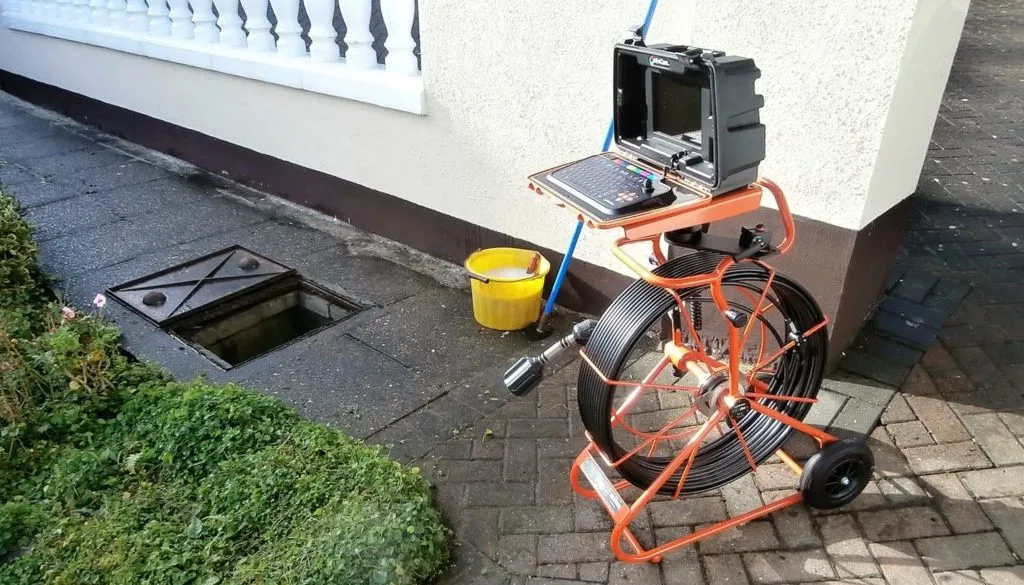
A sewer survey uses the same camera principle as a drain survey, but the pipe is bigger, busier and often owned by the water company. Here is when one is needed, who can commission it and what the report should contain.
A sewer CCTV survey is a camera inspection of a pipe that carries waste from more than one property, recorded and coded so that its condition can be graded and compared over time. It uses the same basic idea as a drain survey, but the pipe is usually bigger, deeper and busier, it often belongs to the water company rather than to you, and who is allowed to survey it, and why, changes accordingly.
What is the difference between a drain and a sewer?
A drain serves one property; a sewer serves two or more. That single distinction decides who owns the pipe, who has to fix it and who can commission a survey of it.
Since 1 October 2011, most private sewers and lateral drains in England that connect to the public network have belonged to the water company, which in most of London means Thames Water. A lateral drain is the stretch of your own drain that sits outside your property boundary, usually under the pavement or road, on its way to the sewer. In practice, the pipe you own is normally the one that serves only your home and runs within your boundary. Once it joins a pipe shared with a neighbour, or crosses into the street, it is usually the water company's.
There are exceptions. Pipes laid after 2011 that have not yet been adopted, drains on large private sites and some shared runs that never connected to a public sewer can still be privately owned. Our guide to telling a blocked sewer from a blocked drain covers how to work out which one you are dealing with on the day.
When does a sewer need a CCTV survey?
Most sewer surveys are commissioned for one of four reasons: a new sewer is being handed over for adoption, building work is planned close to or over an existing sewer, a commercial or estate owner is managing a private sewer network, or there is a dispute about where a defect sits.
- Adoption. Developers who want the water company to adopt new sewers under a Section 104 agreement must provide a CCTV survey to the company's standards before adoption. The survey is checked against the current design and construction guidance, not only against condition grades.
- Building over or near a sewer. Water companies usually want the pipe surveyed before and after the work. That process is covered in our article on the build over agreement CCTV survey.
- Private sewer networks. Industrial estates, hospitals, schools, blocks of flats and retail parks often own long sewer runs that were never adopted. A periodic survey lets the owner plan repairs instead of waiting for a collapse.
- Disputes about responsibility. When a homeowner is told a blockage is "their drain" and suspects it is the public sewer, a survey from the nearest private chamber that shows the defect is beyond the connection is the evidence that settles it.
Who is allowed to survey a public sewer?
The water company is responsible for its own sewers, and you should not arrange for anyone to enter, clean or survey a public sewer without its permission. If a blockage or defect appears to be in the public sewer, the first call is to the water company, not to a private contractor.
What a private contractor can do is survey your own drain up to the point where it joins the sewer, and record where the problem starts. A camera pushed from your inspection chamber will often travel far enough to show the connection and the first few metres of sewer, which is usually all the water company needs to accept that the fault is theirs. Deliberate work inside a public sewer, such as a planned adoption survey or a survey for a new connection, is done under the water company's approval and, in the street, with permits and traffic management from the highway authority.
How a sewer survey differs on site
The pipe is larger, deeper and carrying live flow, so the equipment and the planning are different from a survey of a domestic drain.
Small domestic drains, usually 100 or 150 millimetres across, are inspected with a push-rod camera fed in by hand. Sewers are commonly 150 millimetres and larger and run for long distances between manholes, so they are usually surveyed with a crawler camera: a wheeled unit driven down the pipe on a cable, carrying a camera that can pan and tilt and a way of measuring distance accurately. Large sewers that a person could walk through are a different category again. Entering them is confined space work, which needs trained teams, gas monitoring and rescue arrangements, and it is rarely what a homeowner or small business needs.
Flow is the other big difference. A sewer carries waste from many properties, and water in the pipe hides the invert (the bottom of the pipe), which is where cracks, deposits and open joints are often found. Surveys are often timed for low flow at night, or the flow is held back or pumped around the section being surveyed. A report that says "water level 40 per cent" through a length is telling you that part of the pipe was not seen.
How sewer defects are coded and graded
Sewer surveys in the UK are coded to the WRc Manual of Sewer Condition Classification, and the codes are then turned into structural and service grades from 1 to 5. Grade 1 means no significant defect; grade 5 means the pipe has collapsed or is about to.
The same coding system is used for many domestic drain surveys, which is helpful: a crack, a deformed pipe or a displaced joint is described with the same codes whether it is in your drain or the public sewer. What changes is the context. A defect that would be a sensible repair on a 10-metre private drain may be a planned asset replacement for the water company, and adoption surveys are judged against construction standards as well as grades. If you are handed a sewer survey and want to understand it, our guide to reading a CCTV drain survey report explains the grades and the defect codes most likely to appear.
What a useful sewer survey report contains
A useful report lets someone who was not there find every defect again. That needs each length identified between two manholes, the direction of survey, and distances measured from a fixed starting point.
Ask for these as a minimum:
- a plan showing each manhole, its reference and the direction of each surveyed length;
- pipe material, shape, diameter and, where it can be established, depth;
- every observation coded, with its distance and a still image;
- structural and service grades for each length;
- the video, with an on-screen distance counter, supplied with the written report;
- any length that could not be completed, and why: blockage, collapse, water level or no access.
For a private sewer owner, the value is in the plan and the grades. They turn a list of observations into a priority list: which lengths need action now, which need watching and which are fine.
When a sewer survey is the wrong answer
If your toilet will not flush and your own inspection chamber is full, you need the blockage cleared and the cause established, not a sewer survey. If the chamber nearest the road is empty while yours is full, the problem is on your side. If every chamber is full up to the street and neighbours have the same problem, report it to the water company.
A sewer survey also cannot tell you who owns a pipe on its own. Ownership comes from the legal position and the water company's records; the survey shows where the pipe goes and what state it is in. For private drains up to the sewer connection, our CCTV drain survey service in London produces a coded written report with a plan and footage, which is normally all a homeowner, managing agent or insurer needs.
Frequently asked questions
Who is responsible for a sewer in London?
Since October 2011, most sewers and lateral drains that connect to the public network in England belong to the water company, which in most of London is Thames Water. The pipe you own is normally the drain that serves only your property and runs within your boundary. Unadopted pipes on private sites and some newer developments can still be privately owned.
Can I pay for a CCTV survey of the public sewer?
You should not arrange for anyone to enter or survey a public sewer without the water company's permission. A contractor can survey your own drain up to the connection, and that footage often shows the first few metres of the sewer, which is usually enough evidence for the water company to accept that a fault is theirs.
What camera is used for a sewer survey?
Sewers are usually surveyed with a crawler camera, a wheeled unit driven along the pipe on a cable with a pan-and-tilt head and accurate distance measurement. Push-rod cameras are used for small domestic drains. Large sewers that a person can enter are confined spaces and need specialist teams.