Reading a CCTV Drain Survey Report: What the Grades Actually Mean
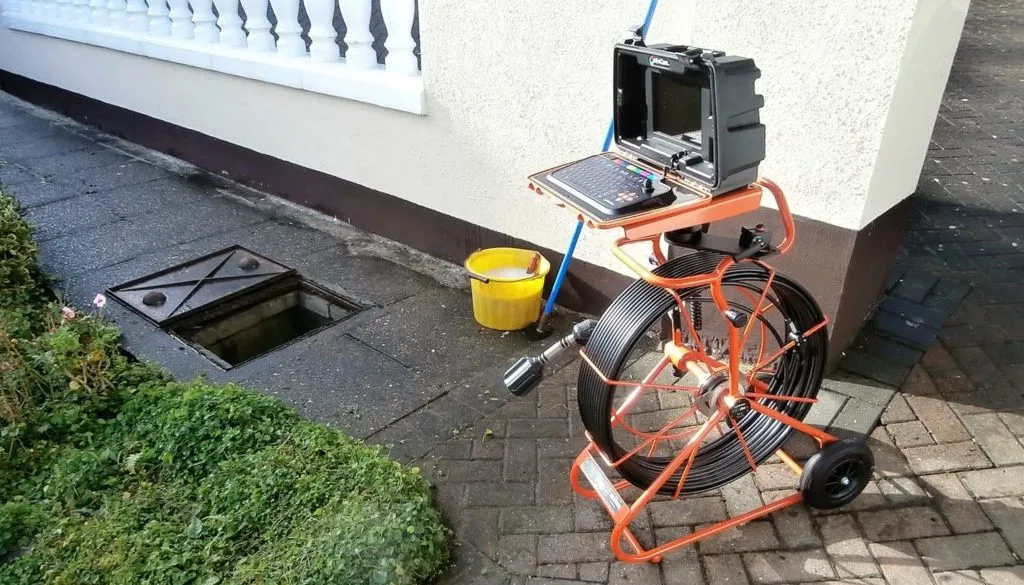
Every surveyed run gets two grades, not one, and confusing them is the most expensive misreading of a drainage report. Here is what the numbers, the codes and the chainages actually tell you.
A CCTV drain survey produces two things: footage, and a document that interprets it. The footage is the easy part. The document is where the value sits, and it arrives full of two-letter codes and a pair of numbers between one and five that decide whether you are looking at a cleaning job, a lining job, or a reason to renegotiate a house purchase. This guide translates it.
Footage or findings: what you are actually paying for
A survey and a survey report are not the same purchase. Footage on a memory stick tells you what the inside of the pipe looked like. A report tells you what was wrong, where along the run it was, how severe it is against a recognised standard, and what should be done about it. Only the second is usable by a conveyancer, an insurer or an adopting authority.
A report that meets professional standards contains, at minimum: a schematic of the runs surveyed with chamber references, the direction and start point of each run, chainage-referenced observations in order, still images pulled from the footage at each significant defect, coded classifications for those defects, condition grades for the run, and a written conclusion with recommended remediation. Our reports classify observations using WRc-adopted coding, which is what makes them legible to a third party who was not standing at the manhole.
If you are being quoted for a survey, the question worth asking is not the price of the visit but whether a coded written report is included or charged separately afterwards. A surprising number of cheap surveys are footage-only, and footage without a report puts the interpretation back on you.
Structural and service grades 1 to 5, translated
Every surveyed run gets two separate grades, both on a one-to-five scale where one is sound and five is failed. The structural grade describes the pipe's physical integrity. The service grade describes its ability to carry flow. They are independent — a pipe can be structurally perfect and service grade five because it is full of grease.
The grades come from a scoring system. Each coded observation carries a score, and the run is assessed both on its peak score, meaning the single worst defect found, and on the accumulated score along its length. That is why a report usually shows both: one severe fracture and twenty minor ones are different problems requiring different responses, and a single averaged number would hide that.
| Grade | Structural — what it means | Service — what it means |
|---|---|---|
| 1 | Sound. No significant structural defects | Free-flowing, negligible deposits |
| 2 | Minor defects, no action needed yet | Light deposits or minor root fibres |
| 3 | Moderate deterioration — plan a repair | Noticeable loss of cross-section; clean it |
| 4 | Serious defects; failure likely without work | Substantial obstruction; blockages expected |
| 5 | Failed or on the point of failure | Effectively blocked |
The practical translation: structural grades three and above point to lining or replacement, because the pipe wall itself has deteriorated. Service grades three and above point to jetting, root cutting or de-scaling, because the pipe is sound but something is in the way. Confusing the two is the most common and most expensive misreading of a survey report — paying to reline a pipe that only needed cleaning, or repeatedly cleaning a pipe that is actually breaking up.
The defect codes you will see, and which ones matter
The codes are abbreviations from the standard classification manual, and they are consistent between contractors, which is the point of using them. You do not need to learn all of them. Roughly a dozen account for almost everything found in London domestic and small commercial drainage.
- CR — crack. A visible line in the pipe wall with no displacement. Minor on its own; significant if it recurs along the run.
- FC, FL, FM — fractures, circumferential, longitudinal or multiple. The wall has broken but the pieces are still in position. Structural, and the usual trigger for lining.
- B — broken. Pieces of the pipe wall have moved out of position. More serious than a fracture.
- X — collapse. The pipe has lost its shape entirely. Not linable; this one means excavation.
- D — deformed. The bore has been squeezed out of round, usually by ground loading. The percentage of deformation determines whether lining remains an option.
- JDL, JDM — displaced joint, large or medium. Common in older short-length clay pipework and a frequent entry point for roots.
- OJL, OJM — open joint. A gap between pipe lengths. Where fine roots almost always get in.
- R codes — roots, subdivided into fine, mass and tap roots. Fine roots are a cleaning job. A tap root is a structural finding, because something forced its way through the wall.
- DE codes — deposits, settled, attached or grease. A service issue: jetting territory.
- OB — obstruction. A foreign object, intruding masonry, or debris.
- Infiltration codes, graded from a seeper through to a gusher. Groundwater entering the pipe, which both loads the system and signals a defect.
- CXI — intruding connection. A branch pushed too far into the main run. A classic cause of repeat blockages that no amount of jetting will fix.
- WL — water level, recorded as a percentage of the diameter. Not a defect in itself, but critical context, as explained below.
Each observation is recorded against a chainage — the distance in metres from the survey start point. That is what turns a report into something actionable: it lets an engineer locate the defect from the surface without opening anything, and it lets you compare a report from this year with one from three years ago and see whether the defect has progressed.
Pre-purchase surveys: what a conveyancer actually needs
For a property purchase, the report has to answer three questions your solicitor will ask: is any defect on the private drain or on the public sewer, is it structural or service, and what would remediation cost. A grade alone does not answer any of them. A report that stops at "grade 3" is not usable in a negotiation.
The ownership question is the one people underestimate. Since the transfer of private sewers in 2011, most pipework beyond a property's boundary, and most shared runs, belongs to the sewerage undertaker rather than the owner. A defect coded on the far side of that line is not the buyer's liability, and a report that does not identify where the boundary falls leaves you negotiating over a pipe you would never have had to pay for. The standard drainage and water search a conveyancer obtains shows the recorded public sewer network, but it says nothing about the condition of the private drainage — that is precisely the gap a survey fills.
Across the boroughs we cover — Camden, Islington, Hackney, Westminster, Kensington and Chelsea, Southwark, Lewisham, Greenwich, Wandsworth, Merton, Sutton, Richmond, Barnet, Enfield, Harrow, Bexley and Bromley — the recurring pre-purchase finding in period stock is displaced and open joints in 100 mm salt-glazed clay, often with fine root ingress, on a run that also passes beneath a later extension. That combination changes the remediation cost substantially, and it is worth having priced before exchange rather than after.
Insurance and adoption surveys are different documents again
Same camera, different report. An insurance survey has to establish cause and, as far as possible, whether damage was sudden or gradual, because most buildings policies treat gradual deterioration differently from an identifiable event. An adoption survey has to demonstrate compliance with the undertaker's construction specification, which is a pass-or-fail exercise rather than a graded one.
For an insurance instruction, the useful evidence is time-stamped footage, stills showing the defect and its surroundings, a clear statement of what caused the failure, and a record of the condition of adjacent lengths — which is often what distinguishes a one-off event from a system in general decline. Our approach to that documentation is set out on our CCTV drain survey page, and the claims process is covered in more detail under drainage insurance claims.
For adoption, where new drainage is to be taken over by the sewerage undertaker under a Section 104 agreement, the survey is measured against the current design and construction guidance rather than against condition grades. Standing water beyond the permitted tolerance, an intruding connection, or debris left in the run will fail the inspection regardless of how structurally sound the pipe is. It is a different question being asked of the same footage.
What a survey cannot tell you
A camera reports what it can see, when it saw it. It cannot date a defect, cannot see past a collapse or a full blockage, cannot see below standing water, and cannot tell you whether the ground movement that caused a fracture has stopped. Every one of those limits has cost someone money at some point.
The standing-water limitation is the one to watch on your own report. If the water level code shows a substantial percentage of the diameter along a section, the camera did not see the invert there, and any statement about the condition of the bottom of the pipe in that stretch is an inference rather than an observation. A survey run immediately after heavy rain, or before the run has been cleaned, is worth less than the same survey run under normal flow.
Two further limits are worth stating plainly. A survey establishes where roots entered a pipe, not which tree they came from — that requires other evidence, and it matters when a street tree and a liability question are involved. And a survey is a snapshot: it does not predict when a grade three pipe becomes a grade four. That is the argument for keeping the report, with its chainages, so the next survey can be compared against it rather than read in isolation.
Frequently asked questions
What is the difference between a structural grade and a service grade?
The structural grade describes the physical condition of the pipe wall — cracks, fractures, deformation and collapse. The service grade describes how freely the pipe carries flow — deposits, roots, obstructions and standing water. They are scored separately because they need different remedies: structural defects call for lining or replacement, service defects for cleaning or root cutting.
Does a grade 3 drain need to be repaired immediately?
Not usually, but it should be planned rather than ignored. A structural grade 3 indicates moderate deterioration that is likely to worsen, so it is a case for scheduling a repair and re-surveying rather than for emergency work. A service grade 3 generally means the run should be cleaned, after which the service grade should improve immediately.
Should I accept a survey that comes as footage only?
Only if you intend to interpret it yourself and no third party needs it. Footage without a coded written report cannot be relied on by a conveyancer, an insurer or an adopting authority, because it carries no chainages, no classifications and no condition grades. Always confirm before booking whether a written report is included in the quoted fee.