Is a Septic Tank Covered by Home Insurance? Off-Mains Claims Explained
Buildings insurance often covers sudden damage to a septic tank or its pipes, but not wear, blockages, a clogged drainage field or regulatory upgrades. Here is what off-mains claims turn on and the evidence insurers ask for.
A septic tank is usually covered by buildings insurance as part of the property's underground services, but only for sudden damage with a clear cause, such as a vehicle crushing the tank lid or a pipe broken during building work. Most policies exclude gradual wear, blockages, a drainage field that has clogged with age, and the cost of upgrading a system to meet the rules. Whether a claim succeeds usually depends on the evidence you can show about what happened and when.
This applies to all off-mains drainage: septic tanks, cesspits (sealed holding tanks), package treatment plants and the drainage fields or soakaways they discharge to. Policy wordings differ a lot. What follows is how claims on these systems generally work in practice. Your own policy schedule and wording decide what is covered, so read them before you call the insurer.
Which parts of an off-mains system can be covered?
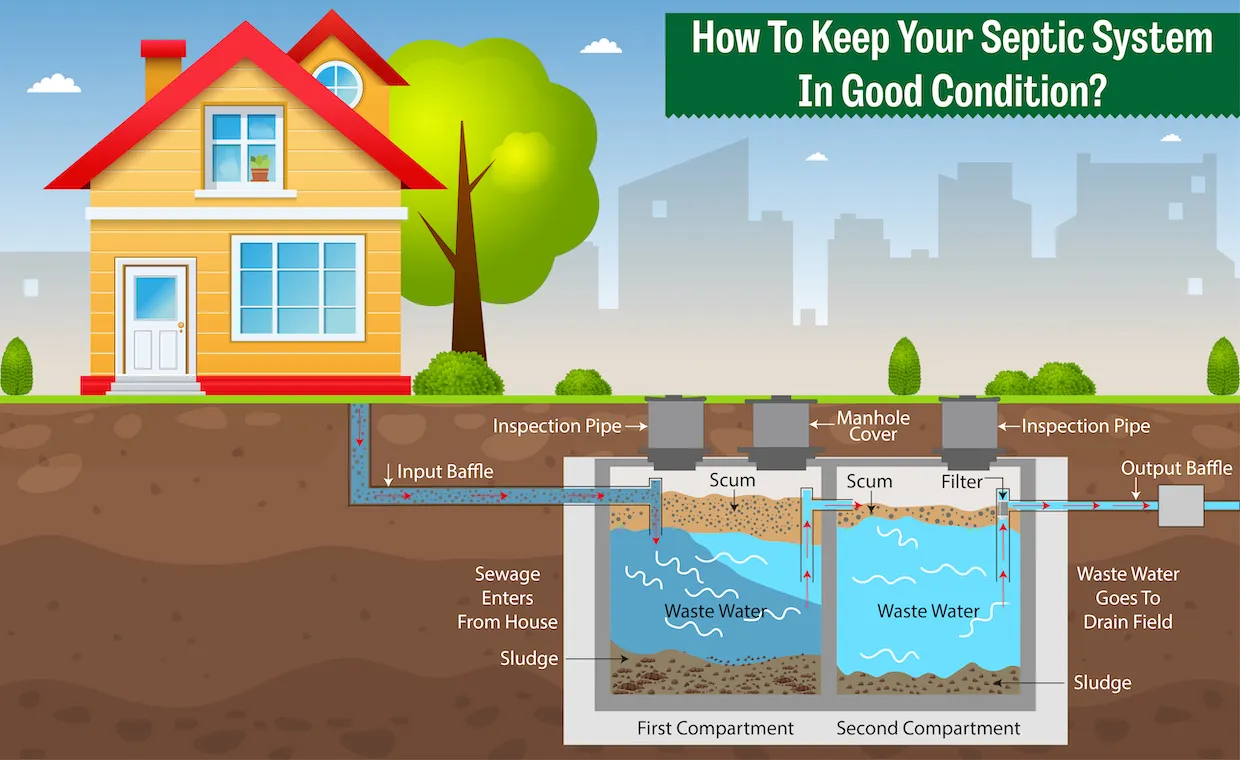
The tank, the pipes to and from it and the drainage field are normally treated as part of the buildings, in the same way as the underground drains of a house on mains sewerage. Electrical and mechanical parts of a treatment plant, such as the air blower, pump and control panel, are a different matter.
- The tank itself. A cracked or crushed tank, a broken baffle or a collapsed lid can be accidental damage if something caused it.
- Inlet and outlet pipes. These are often the part that actually fails, and they sit under the same accidental damage wording as other underground pipes.
- The drainage field or soakaway. Cover is harder to get here, because most failures are gradual clogging rather than damage.
- Treatment plant equipment. Blowers and pumps wear out. Many buildings policies treat a failed motor as mechanical breakdown, which is usually excluded unless you have a separate breakdown or service contract.
Check whether your schedule lists "underground services" or "accidental damage to underground pipes and cables". Some basic policies only cover accidental damage to drains as an optional extra.
What insurers usually refuse to pay for
The common reasons for a declined septic tank claim are wear and tear, lack of maintenance, and work needed to comply with regulations. None of those is an insured event under most buildings policies.
- A full or overflowing tank. A tank that has not been emptied is a maintenance problem, not damage. Emptying is always the owner's cost.
- A clogged drainage field. When solids carry over from a tank that has gone too long between desludges, they seal the soil around the distribution pipes. That builds up over years, and insurers treat it as gradual.
- Old tanks failing with age. Brick or concrete tanks that crack and leak slowly, and older fibreglass tanks that deform, are usually classed as deterioration.
- Upgrades to meet the General Binding Rules. In England, a septic tank that discharges straight to a ditch, stream or other surface water had to be replaced or upgraded, normally to a treatment plant or a drainage field, by 1 January 2020, or sooner if it was causing pollution, and must be dealt with when the property is sold. That is a compliance cost, not a claim.
- Blockages. Clearing a blocked inlet pipe is generally outside buildings cover, although some home emergency add-ons pay for it.
A declined claim is not always the end of it. If the tank failed because something happened to it, the question is whether you can show that.
When a claim is likely to succeed
Claims on off-mains systems succeed when there is a dated event and a physical mechanism that explains the damage. The pattern is the same as for any underground drain, which we cover in more detail in how insurers tell accidental damage from wear and tear.
Typical examples are a delivery lorry, oil tanker or digger driven over a tank that was never designed to carry traffic, a pipe broken by contractors laying a new service or putting in a fence, ground heave or subsidence moving the tank (usually a separate section of the policy with its own excess), and a flood that lifts or shifts a tank that was emptied for servicing. Tree roots are a grey area: a root that has cracked a tank wall is a stronger case than fine roots entering through an open joint.
The more closely the damage lines up with the event, the easier the claim. A lid that cracked the week a skip was delivered, with tyre marks across the lawn, tells its own story. A tank that has leaked for years and was only noticed when the drainage field flooded does not.
What evidence the insurer will ask for
Expect to be asked for proof of maintenance, proof of the damage and proof of the cause. Collecting it before you claim saves weeks of back and forth with a loss adjuster.
- Emptying records. Waste transfer notes or invoices from the licensed carrier that has been desludging the tank. A gap of several years makes a maintenance exclusion much more likely.
- Service records for a treatment plant. Most manufacturers set a service interval, and a plant that has never been serviced is hard to claim on.
- A survey of the tank once it has been emptied. Cracks, broken baffles and failed inlet or outlet connections can only be seen properly in an empty tank. What an inspection should cover is set out in what a septic tank survey checks.
- A CCTV survey of the pipes. A coded camera survey of the inlet and outlet runs records the location, type and severity of each defect, which is what separates a single fracture from general deterioration.
- Photographs and dates. The event, the ground above the tank, and anything that changed, such as sinking, pooling sewage or a new smell.
Do not pay for repairs before the insurer has agreed, unless the work is needed to stop pollution or prevent further damage. If you have to act first, photograph everything and keep the removed parts where you can.
Pollution and liability: the part people overlook
If a failed tank lets sewage into a ditch, a stream or a neighbour's land, the owner is responsible for stopping it, whatever the insurer decides about the repair. The Environment Agency can require the problem to be fixed, and a neighbour whose garden or well has been affected may claim against you.
Clean-up and third-party damage may fall under the liability section of your policy rather than the buildings section, and some policies exclude gradual pollution altogether. Tell the insurer early if sewage has left your property. Having the tank emptied straight away limits the spread and is a cost you would face anyway. Our septic tank and cesspit emptying service covers the outer London areas where off-mains systems are still common.
How a survey report supports an off-mains claim
A written survey report turns a disputed claim into a question of fact: what is damaged, where it is, and whether it looks sudden or gradual. A report that a loss adjuster can rely on should include:
- a plan of the system showing the tank, chambers, pipe runs and drainage field, with distances;
- the condition of the tank after emptying, with photographs of each defect;
- coded observations and condition grades for each pipe run, with still images at each defect;
- a clear statement of which defects look recent and which look long-standing, and why;
- recommended repairs, separated into those caused by the event and those that are existing wear.
That last point matters. An honest report that separates old defects from new damage is more believable to an insurer than one that blames everything on the event, and it stops a valid part of the claim being refused along with the rest. We explain how the process runs from first inspection to the report in our drainage insurance claims service.
When the evidence shows gradual failure, the survey is still worth having. It tells you what actually needs repairing, whether the drainage field can be saved, and whether the system needs upgrading under the rules, which is information you will need to budget for the work yourself.
Frequently asked questions
Does home insurance cover a septic tank?
Buildings insurance usually treats a septic tank and its pipes as part of the property's underground services, so sudden accidental damage with a clear cause can be covered. Gradual wear, blockages, a clogged drainage field, lack of emptying and upgrades needed to meet the General Binding Rules are normally excluded. Your own policy wording decides the detail.
Is a failed treatment plant pump covered by insurance?
Often not under buildings cover. A failed blower, pump or control panel is usually treated as mechanical breakdown or wear, which most buildings policies exclude. Some owners have a separate breakdown or service contract that covers these parts. Physical damage to the plant from an event, such as a vehicle driving over it, is a different case.
What evidence do I need for a septic tank insurance claim?
Emptying records from the licensed carrier, service records for a treatment plant, photographs and dates of the event, a survey of the tank once it has been emptied and a coded CCTV survey of the inlet and outlet pipes. A report that separates recent damage from long-standing wear gives the insurer a clear basis for its decision.