Thames Water Approved Contractor: What It Means for Your Drains
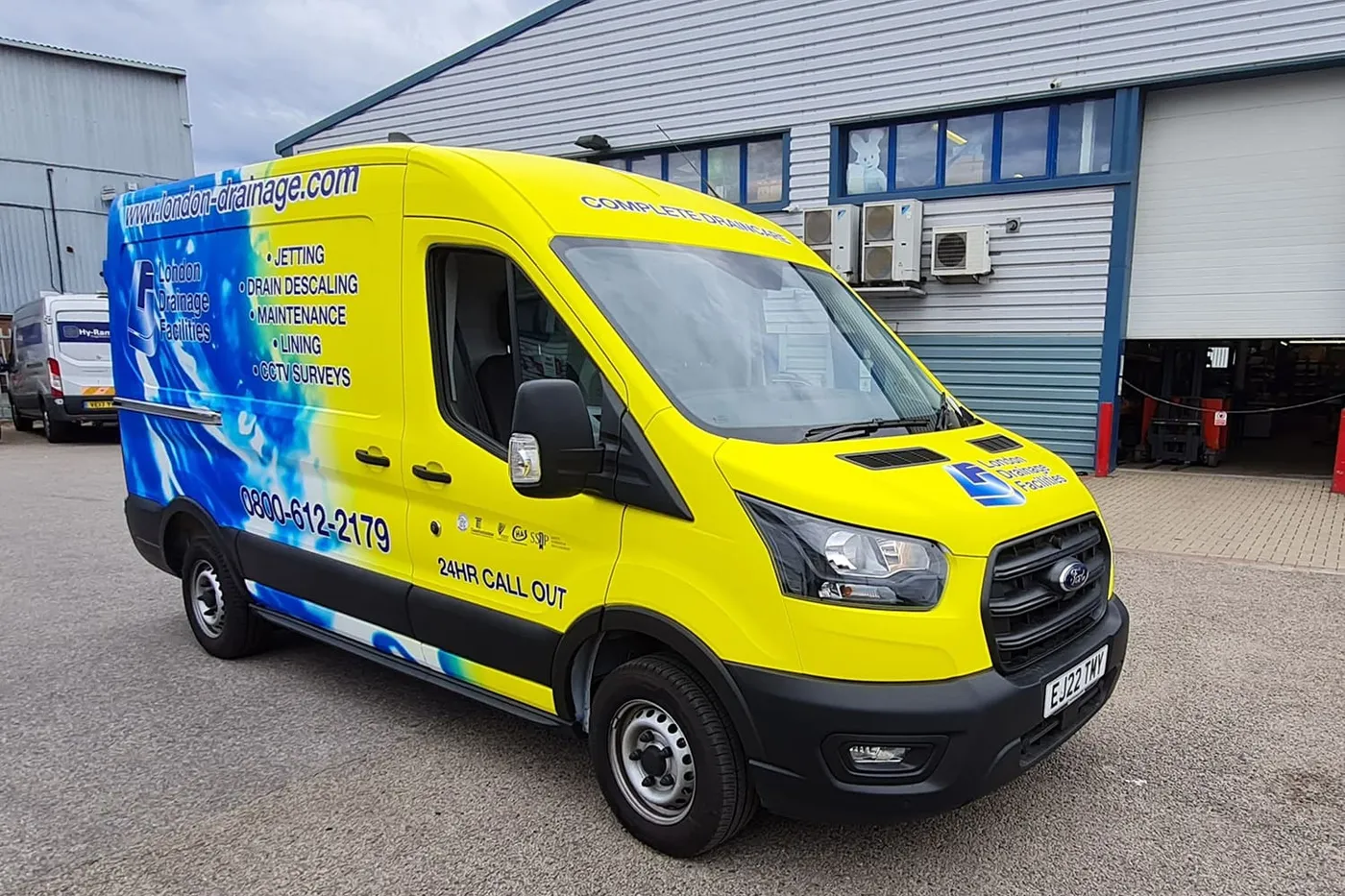
"Thames Water approved" appears on plenty of vans and websites, but for the private drains on your property there is no approval you need a contractor to hold. Here is what the phrase can mean, and the jobs where Thames Water really does have to be involved.
For work on the private drains at your property, you do not need a Thames Water approved contractor. Those drains belong to you, and you can use any competent drainage firm to clear, survey or repair them. Thames Water only has to be involved when the work touches its own sewers: a new connection, building over or near a public sewer, or a fault that turns out to be on the public side. When a company describes itself as Thames Water approved, the useful response is to ask exactly which scheme or approval it means.
Do you need a Thames Water approved contractor to fix your drains?
No. The drains that serve only your property and sit within its boundary are your responsibility, and there is no Thames Water approval a contractor has to hold to work on them. What matters is whether the firm can find the fault, show you evidence of it and put it right properly.
That covers most domestic drainage work in London: clearing a blocked gully or inspection chamber, jetting, a CCTV survey, root cutting, relining a cracked section of your own pipe or rebuilding a chamber in your garden. None of it needs Thames Water's permission, and Thames Water will not send anyone to do it for you. If a firm tells you a job on your own drain must be done by a Thames Water approved contractor, ask them to show you where that requirement comes from.
Where your drain ends and Thames Water's sewer begins
Broadly, a pipe that serves only your property and runs inside your boundary is yours. Once it is shared with a neighbour, or leaves your boundary, it is usually Thames Water's. Since 1 October 2011, most shared private sewers and lateral drains in England that connect to the public sewer have been the water company's responsibility.
In a London terrace this line often runs through the back garden. Several houses may drain into one pipe that runs behind them before turning towards the road, and that shared run is normally a public sewer even though it sits on private land. A blockage or collapse there is Thames Water's to deal with, and you should report it to them rather than pay a contractor to fix it.
The difficulty is that you often cannot tell where the line falls without seeing the pipes. Records are incomplete, and extensions and conversions have changed many layouts. Drain tracing and a CCTV survey show which chambers connect to which, where each run goes and where the fault sits. That evidence is what a water company will want if you report a defect you believe is on the public side. Our guide to who is responsible for a shared drain blockage covers the ownership rules in more detail.
What "Thames Water approved" can actually mean
The phrase is used loosely, so ask what sits behind it. In practice it usually refers to one of a few quite different things, and only some of them have anything to do with drains.
- Approved plumber schemes for water supply. Schemes such as WaterSafe cover work on the clean-water supply under the Water Supply (Water Fittings) Regulations 1999. They are about pipes and fittings carrying drinking water, not drainage, and a plumber's membership says nothing about their drainage work.
- Working for Thames Water. Water companies use contractors for work on their own sewers and mains. A firm doing that is working for Thames Water. It does not make the firm approved for your private drain, and it is not something you can book through them for a public sewer fault.
- A specific permission for a specific job. A new sewer connection or a build over agreement comes with Thames Water's written consent and conditions. That approval belongs to the job, not to the contractor in general.
- Nothing specific. Sometimes the phrase simply means the firm has worked alongside Thames Water, or it is marketing.
A reputable firm will answer the question plainly. If the answer is vague, treat the claim as carrying no weight and judge the firm on the evidence it gives you instead.
Jobs where Thames Water really does have to be involved
Thames Water's consent is needed when your work affects the public sewer network. These are the cases that come up most often at London properties:
| Job | What Thames Water is involved in |
|---|---|
| New connection to a public sewer | An application to connect under Section 106 of the Water Industry Act 1991, with conditions on how and where the connection is made |
| Building over or within 3 metres of a public sewer | A build over agreement, usually supported by CCTV surveys of the sewer |
| Moving a public sewer | A sewer diversion application, designed and agreed with Thames Water |
| New sewers a developer wants adopted | An adoption agreement, with the sewers built to the adoption standard and inspected |
| Discharging trade effluent from a business | Trade effluent consent |
| A fault found on a shared or public run | Reporting it to Thames Water, which carries out the repair |
For a new connection, Thames Water's approval sets out whether it will make the physical connection itself or whether your contractor may do so, and on what terms. Your contractor should be working from that written approval, and you should have a copy. For extensions near a sewer, our article on the CCTV surveys needed for a build over agreement explains what the water company usually asks to see.
How to check a contractor's claim
Ask three questions: approved by whom, for what, and can I see it? A genuine membership or consent can be named and shown, and scheme memberships can usually be checked on the scheme's own public register.
Then ask the questions that matter for drainage work, whatever badges the firm shows:
- Will you survey before you quote for a repair, and will I get the footage and a written report?
- Will the report code defects to a recognised standard, give their positions and say which runs are private and which are shared?
- If the fault is on the public side, will you say so and give me the evidence to report it, rather than quote to fix it?
- What is the price, and what is it for, before any work starts?
A firm that answers those clearly is a better bet than one relying on a logo. Our guide on how to choose a drainage company in London goes through the rest of the checks.
When paying a contractor is the wrong answer
If the problem is in a public sewer, you should not be paying anyone to fix it. Report it to Thames Water, which is responsible for the repair.
The common signs are a blockage that affects several neighbouring houses at once, or a chamber that backs up while your own chamber upstream runs clear. Where it is not obvious, a short survey to establish which side of the boundary the fault is on can be worth paying for, because it stops you funding a repair that was never yours. What a survey should not turn into is a quote to repair someone else's sewer. If that is where the evidence points, the report should say so and stop there.
Frequently asked questions
Does a drainage company need to be Thames Water approved?
Not for work on your own private drains. Those belong to you, and any competent drainage contractor can clear, survey or repair them. Thames Water's consent is needed for work that affects its sewers, such as a new connection, building over a public sewer or a sewer diversion, and that consent applies to the specific job.
Is a WaterSafe approved plumber approved for drainage?
No. WaterSafe and similar approved plumber schemes cover work on the clean-water supply under the Water Fittings Regulations. They do not assess drainage work, so membership tells you nothing about how a firm handles blocked drains, surveys or drain repairs.
Who fixes a blocked shared drain in London?
Usually Thames Water. Most drains shared by more than one property, or running outside your boundary, have been the water company's responsibility since October 2011. Report the fault to Thames Water. If it is unclear whether the blockage is on the shared or private section, a CCTV survey or drain trace can show where it is.