Drain Surveys for Blocks of Flats: A Guide for Managing Agents
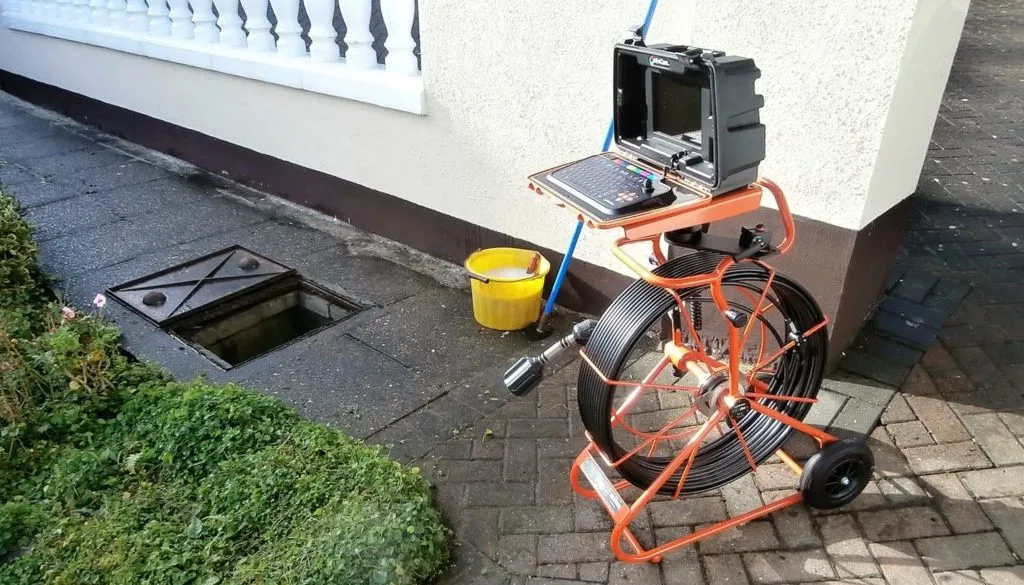
Repeated blockages, basement smells and insurance claims in a block of flats all come back to the communal drains. Here is who is responsible, what a block survey should cover and how the report supports consultation with leaseholders.
A drain survey for a block of flats is a CCTV inspection of the building's communal drainage, usually commissioned by the managing agent or freeholder, to find the cause of repeated blockages or smells, record condition before major works, or support an insurance claim. It should cover every shared run and chamber and produce a report that leaseholders, contractors and insurers can all read.
Who is responsible for the drains in a block of flats?
In most blocks the lease makes the freeholder or management company responsible for the communal drains, and each leaseholder responsible for the pipework that serves only their flat. The exact split is in the lease, and it is worth reading before anyone is asked to pay.
As a rule of thumb, the waste pipe from a kitchen sink to the point where it joins a shared soil stack belongs to the flat. The stack, the underground drains and the chambers in the grounds are common parts. Beyond the building's boundary, the pipe is usually a public sewer and the water company's responsibility. Pipes within the grounds of a single block generally stay private, so do not assume the 2011 transfer of private sewers to Thames Water has moved responsibility for them. Our guide to shared drain responsibility covers the boundary rules in more detail.
When a managing agent should commission a survey
Commission one when a problem keeps coming back, before spending significant money on repairs, or when the condition of the drains needs to be on record. Clearing the same blockage for the third time without looking at the pipe is the most common false economy in block management.
- Repeat blockages on the same stack or run, which point to a defect such as a displaced joint, a sag or root ingress rather than bad luck.
- Smells in a basement, bin store or car park, often from a broken pipe, a dry trap or a failed chamber.
- Taking on a new building, where a baseline survey shows the incoming agent what has been inherited.
- Planning the reserve fund, since a coded survey shows whether a large drainage repair is coming in the next few years.
- Before major works such as resurfacing a car park or adding a storey, when drains below can be damaged or become inaccessible.
- An insurance claim for subsidence or escape of water, where the insurer will want coded evidence. Our drainage insurance claims page explains what is usually asked for.
What a block survey should cover
It should cover the whole communal system, not just the run that blocked last. A block's drainage is connected, and a defect downstream is often the cause of symptoms several floors up.
That normally means every chamber in the grounds, the underground runs between them, the connection to the public sewer, and the soil stacks as far as they can be reached through rodding eyes and access points. Blocks with basements may have a pumping station, which needs its own inspection of pumps, floats and alarm. Where the ground floor has shops or restaurants, the kitchen waste connections deserve particular attention, because grease from commercial kitchens is a frequent cause of blockages in residential stacks and drains. Where the pumps lift sewage up to the gravity drain or sewer, the pressurised pipe they discharge into needs tracing and checking as well; our guide to what a rising main is in drainage covers its faults and ownership.
Older blocks bring their own issues. Buildings from the 1950s to the 1970s may have pitch fibre or early plastic drains that deform with age, and cast iron stacks that corrode from the inside. Victorian mansion blocks usually have clay drains with mortar joints and interceptor traps.
Getting a report leaseholders and insurers can use
The report is the product you are paying for. It should let a leaseholder who was not present understand what was found, and let a contractor price the repair without surveying again.
- A plan of the block's drainage with every chamber numbered.
- Each defect coded, graded for severity and located by distance from a named chamber.
- Still images of each significant defect and the full video footage.
- A clear separation between urgent, planned and monitor-only items.
- A statement of which runs could not be surveyed and why.
The last item protects everyone. A report that quietly skips an inaccessible run gives a false picture. How grading and defect codes work is explained in our guide to reading a CCTV drain survey report.
Section 20 and the survey evidence
If the repairs that follow a survey will cost any one leaseholder more than £250, the freeholder normally has to consult leaseholders under section 20 of the Landlord and Tenant Act 1985 before the work goes ahead. A coded survey report makes that consultation easier.
The report gives the notice of intention a clear description of the problem, gives contractors a common specification to price against, and gives leaseholders something concrete to look at when they ask why the work is needed. The same rules apply to long-term agreements costing any leaseholder more than £100 a year, which is relevant if the agent is considering a planned drainage maintenance contract. Take advice on the consultation process itself; the survey supplies the evidence, not the legal procedure.
When a block survey is the wrong answer
It is the wrong answer when the problem sits inside one flat, or when the drains are blocked right now. In the first case the leaseholder needs a plumber, and in the second the blockage has to be cleared before any camera can see the pipe.
A single slow sink or bath with no problems elsewhere in the building almost always sits in the flat's own waste pipe. If waste is backing up into a ground-floor flat or a basement, clear first, then survey. A camera cannot see through standing waste, and residents need the system working before the evidence gathering starts. Give residents notice of the survey visit too. Some runs are best filmed when flow is low, which means asking people to hold off on baths and washing machines for a short period.
Frequently asked questions
Who pays for a drain survey in a block of flats?
Where the survey covers the communal drains, the cost is normally a service charge item recovered from leaseholders under the lease. If the problem turns out to be in pipework serving only one flat, that leaseholder is usually responsible for the repair. The lease sets the exact split.
Does a drain survey need section 20 consultation?
Consultation applies to qualifying works costing any one leaseholder more than £250, and to long-term agreements costing any leaseholder more than £100 a year. A one-off survey often falls below the works threshold, but the repairs it identifies may not. Take advice on the process for your building.
Can the soil stacks inside the building be surveyed?
Usually, as far as they can be reached through rodding eyes, access panels and the base of the stack. Access varies from block to block, and the report should state clearly which stacks or sections could not be reached.