Types of Drainage Survey: Which One Do You Actually Need?
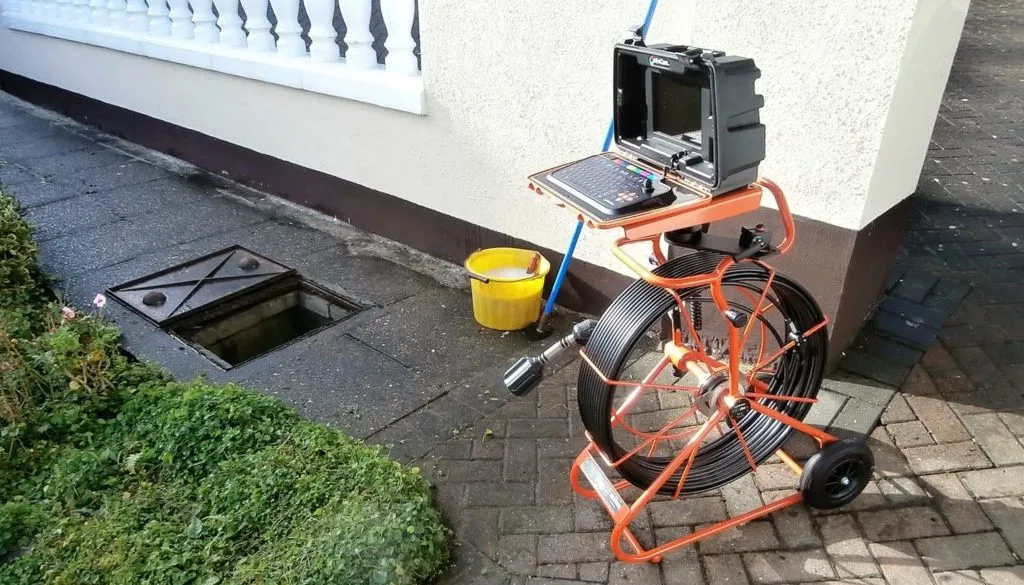
"Drainage survey" covers several different jobs. Each answers a different question, and booking the wrong one leaves you with a report that does not help the person who asked for it.
A drainage survey is not one thing. The term covers several different investigations, each answering a different question: what condition the pipes are in, where they run, how deep they are, whether they leak, or who is responsible for them. The right choice depends on who asked you to get one and what decision it has to support.
Start with the question, not the survey
Pick the survey by the question you need answered. If you are not sure, ask whoever requested it, whether that is a solicitor, an insurer, an architect or building control, what they want the report to show.
| Your question | Survey that answers it |
|---|---|
| What condition are my drains in? | CCTV condition survey |
| Where do my drains run, and where do they connect? | Drain tracing and mapping |
| How deep are the pipes, and what falls do they have? | Level survey of chambers and inverts |
| Do the new drains leak? | Drain testing (air or water) |
| Is this house's drainage a risk to my purchase? | Pre-purchase CCTV survey with written report |
| What caused the damage, and is it covered? | Insurance investigation survey |
Many jobs combine two or more. A pre-purchase survey usually includes some tracing; a survey before an extension often needs condition, route and depth together.
CCTV condition survey
A CCTV condition survey records the inside of each pipe run and grades its structural and service condition. It is the right survey whenever the question is whether the drains are damaged, blocked or deteriorating.
A camera is sent along each run from a chamber, with every observation logged against its distance from the start point. Defects are coded against a recognised standard, and each run gets a structural grade and a service grade. The deliverable is a written report with a plan, stills and recordings. It is the foundation of most other drainage decisions, and the survey most people mean when they say drain survey. Our CCTV drain survey page describes what we include.
It is the wrong survey if what you need is the route of a pipe under a building with no chambers either side of it. The camera shows condition, not position, unless it is paired with tracing.
Drain tracing and mapping survey
A tracing survey establishes where the drains go: their routes, connections, and where the private system meets the public sewer. It is the right survey for extensions, boundary questions, and any building without a reliable drainage drawing.
The usual method is a sonde, a small transmitter in the camera head or on a rod, located from the surface with a receiver and marked on the ground. Dye testing confirms which fittings discharge into which chamber. The result is a plan, sometimes with approximate depths at points along each run. Our drain tracing service covers this work.
Tracing is often what architects and planners mean when they ask for a drainage survey at an early design stage. It is also the survey that settles most disputes about whether a pipe is shared.
Level survey and drain testing
A level survey measures depths and falls; drain testing checks whether a pipe is watertight. Both are mostly needed for new work, alterations and building control rather than for existing problems.
A level survey records cover levels and invert levels at each chamber, from which the depth and gradient of every run can be worked out. Designers need these figures to connect a new extension or basement to the existing system at a workable fall. On larger sites this is often done by a land surveyor alongside a CCTV contractor. Our guide to the drainage level survey, invert levels and falls explains what those figures mean and when you need them.
Drain testing is a pass-or-fail check. A section of pipe is sealed, then pressurised with air or filled with water, and the loss over a set period is measured. Building control usually requires it on new drainage, and it can help confirm a suspected leak in an existing run. It says nothing about condition beyond whether the pipe holds, so it is not a substitute for a CCTV survey.
Pre-purchase and insurance surveys
These are CCTV surveys with a particular audience. The camera work is the same; what changes is what the report must answer.
A pre-purchase survey has to tell a buyer and their conveyancer whether any defect is on the private drain or the public sewer, how serious it is, and what remediation would involve, so it can be used before exchange. See our guide on whether to get a drain survey when buying a house.
An insurance survey has to establish cause as well as condition, because most policies treat sudden damage differently from gradual wear. It needs time-stamped footage, located defects and a clear statement of what caused the failure. Our drainage insurance claims page explains the process.
How to brief the surveyor so you get the right report
Tell the surveyor who will read the report and what decision it supports. That one sentence decides the scope, the method and the format more than anything else.
- Say who asked for it: a solicitor, an insurer, building control, a landlord or yourself.
- Say what is planned: a purchase, an extension, a claim, or a repair.
- Share any existing plans or previous reports, so the new survey can be compared with them.
- Ask what will not be covered, such as runs with no access, sections under standing water, or pipes beyond a collapse.
If you only need to know why one sink keeps blocking, you probably do not need any of these; a quick camera look during a clearance is enough, and a good contractor will say so. Our pricing page shows how survey work is charged, and we will tell you which type fits before you book.
Frequently asked questions
What is the most common type of drainage survey?
The CCTV condition survey. A camera records the inside of each pipe run, defects are coded and located, and each run is graded for structural and service condition. Most pre-purchase, insurance and repair decisions rest on this survey, often combined with some tracing to fix the routes on a plan.
Is a drainage survey the same as a drain test?
No. A drainage survey usually means a CCTV investigation of condition, sometimes with tracing and levels. A drain test is a pass-or-fail check of whether a sealed section of pipe holds air or water. Building control normally asks for testing on new drainage, while buyers and insurers need a condition survey.
Do I need a drainage survey before building an extension?
Usually yes, if the extension is near or over existing drains. The designer needs the route and depth of the pipes, and if a public sewer is involved the water company will want to know its condition before agreeing to building over it. That normally means tracing, levels and a CCTV condition survey together.