What Is a CCTV Drain Survey and Do I Need One?
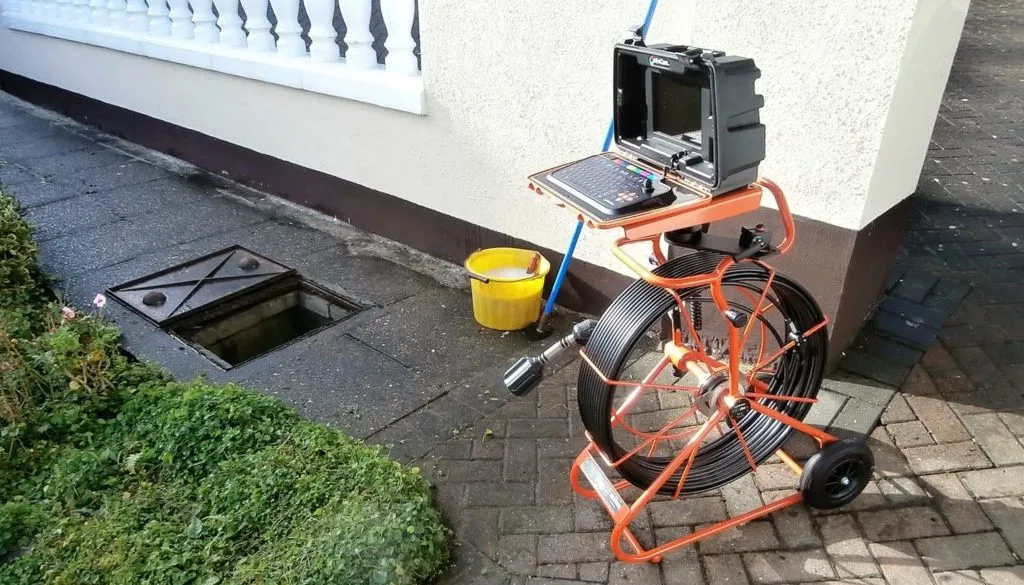
A CCTV drain survey is a precise diagnostic procedure that uses a remote-controlled camera to inspect and document the internal condition of your drainage system.
The Technical Procedure of a CCTV Drain Survey
A CCTV (Closed-Circuit Television) drain survey is a non-invasive diagnostic procedure. Our engineers deploy a high-resolution, waterproof camera mounted on a flexible, remotely controlled crawler into your drainage system. This camera transmits a live, high-definition feed to a monitor at the surface. As the crawler navigates the pipes, our engineer operates the camera pan, tilt, and zoom functions to conduct a systematic inspection of the pipe's internal walls, joints, and flow.
The core of the survey's credibility lies in its documentation. The entire inspection is recorded in real-time. This footage, along with digitally logged distance markers that pinpoint the exact location of any defects, forms the primary evidence. This recorded survey provides an unambiguous, visual audit of the system's condition, moving diagnosis from guesswork to documented fact.
Precisely When You Need a Diagnostic Survey
You need a CCTV survey when symptoms indicate a problem whose location or cause is not visible or accessible from above ground. The key indicators are recurrent, unexplained blockages that standard clearing methods only temporarily resolve. This suggests a structural issue like a fracture, collapse, or root ingress deep within the line. Similarly, if you notice persistent slow drainage across multiple fixtures, it points to a systemic restriction or a gradient problem that requires mapping.
A survey is also a critical prerequisite for any planned property purchase or development work. It acts as a drainage condition report, revealing hidden defects like pre-existing damage, incorrect connections, or deteriorating pipe materials. This evidence informs negotiations and prevents unforeseen, costly repairs post-purchase. Furthermore, if you are planning an extension or landscaping, a survey will definitively map the public sewer connections and private drain runs to prevent accidental damage during excavation.
The Diagnostic Output: From Footage to Actionable Report
The value of the survey is realised in its analysis and reporting. Following the inspection, our engineers review the recorded footage to compile a formal diagnostic report. This is not simply a video file. It is a structured document that catalogues every observed defect—from hairline cracks and offset joints to significant fractures and root intrusions—with corresponding distance markers.
This report provides the documented evidence required to determine the exact remedial solution. For example, it distinguishes between a localised defect suitable for a patch repair or resin lining and a widespread collapse that necessitates excavation and replacement. By providing this visual proof and precise location data, the survey eliminates speculative quoting and ensures any proposed work is strictly necessary, targeted, and cost-effective. It transforms an unknown internal problem into a known, quantified issue with a clear path to resolution.
Beyond Emergency Response: Proactive System Management
While often triggered by a problem, a CCTV survey's greatest utility can be proactive. Scheduling a baseline survey for a property, especially an older one, establishes a condition benchmark. This allows for planned, preventative maintenance rather than reactive emergency call-outs. Identifying minor defects like early-stage root hints or slight mortar loss allows for minor, low-cost interventions that prevent major failures.
For commercial or multi-occupancy buildings, regular survey documentation is a cornerstone of responsible asset management. It provides an audit trail of system health, supports compliance with insurer or regulatory requirements, and informs long-term capital planning for drainage infrastructure. In essence, the survey shifts the approach from dealing with symptoms to understanding and managing the underlying system based on verified evidence.
Frequently asked questions
How long does a typical CCTV drain survey take?
The duration depends entirely on the system's length and accessibility. A standard survey for a single domestic drain run to the main sewer connection typically takes our engineers one to two hours on site to ensure a thorough, documented inspection from the property to the connection point.
Will the survey identify the exact cause of a recurring blockage?
Yes, that is its primary diagnostic purpose. The high-resolution camera provides visual evidence of the obstruction's nature—be it root intrusion, a collapsed pipe section, a build-up of grease, or a displaced joint. The distance logging then pinpoints its precise location for targeted repair.
What do I receive after the survey is completed?
You receive a full diagnostic report. This includes a copy of the recorded survey footage and a written summary that catalogues all observed defects with their corresponding distance markers. This document serves as the evidence-based foundation for any recommended repair solutions.