Do You Need an Emergency Drain Survey? When Urgent CCTV Is Worth It
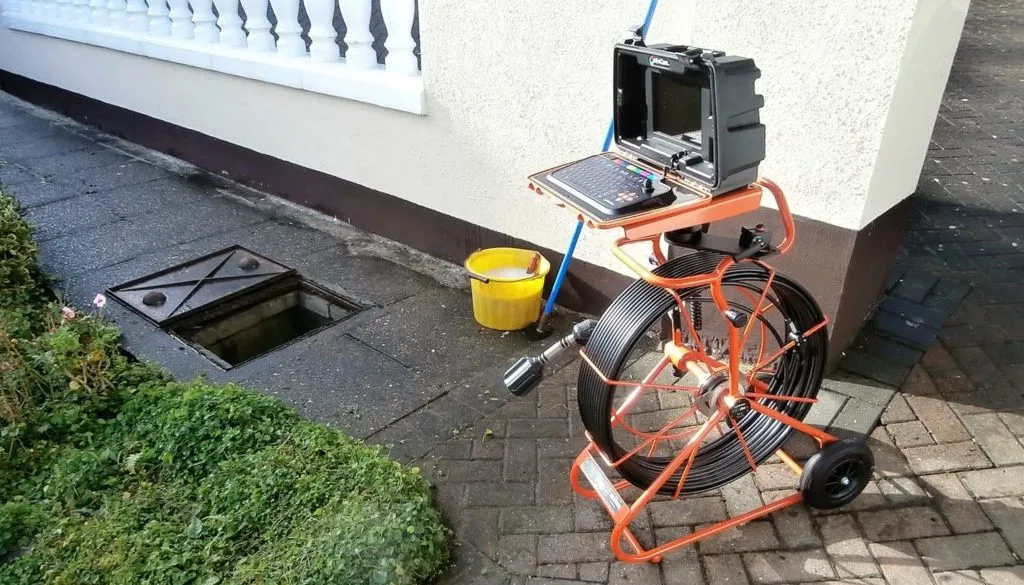
An urgent CCTV survey is worth it when a decision or a deadline depends on the evidence. For most blocked drains, clearing comes first and surveying second. Here is how to tell which situation you are in.
You need an emergency drain survey when a decision has to be made quickly and depends on knowing what is wrong inside the pipe: sewage getting into a building, a suspected collapse, an insurer or a completion date waiting on evidence. For an ordinary blocked drain, the urgent job is clearing it. A survey can follow once it is flowing.
If you have not had one before, our guide to what a CCTV drain survey is and how it is carried out covers the procedure itself.
What makes a drain survey urgent
A survey is urgent when waiting would make the damage worse or the evidence weaker. The drain itself being blocked is rarely the reason on its own. What makes it urgent is what the blockage or defect is doing, or what is waiting on the answer.
- Sewage or waste water is getting into the building and clearing has not stopped it, or it keeps coming back within days.
- There are signs of a collapse: a sudden dip or hole in the ground above a drain run, a chamber that has dropped, or rats appearing indoors or in a garden where there were none.
- A leak may be undermining foundations: new cracking in walls near a drain run, or wet ground that does not dry out.
- An insurer or loss adjuster needs evidence before authorising work, and repairs cannot wait.
- A property transaction has a deadline and the buyer's side has raised a drainage question that has to be answered before exchange.
- Commercial premises cannot trade until the cause of a recurring blockage is known.
If none of those apply, a survey is still worth doing, but it can be booked for a normal working day at a time that suits.
Clear first, survey second: why the order matters
A camera cannot see through standing water or past a full blockage, so surveying a surcharged drain usually shows very little. In most cases the right sequence is to clear the pipe, let it run, then survey it while the cause is still in place.
Doing it in that order is also what makes the survey useful. The camera goes down a clean, flowing pipe and records the condition of the invert, the joints and the connections. If the blockage was caused by a defect, such as a displaced joint catching debris, a root mass or a sag, it is visible and can be coded and located. A survey done with the pipe still full records mainly the water level.
The exception is a suspected collapse. Jetting at pressure into a pipe that has broken up can wash surrounding soil into the drain and make the void above it bigger. Where the signs point to a collapse, the camera should go in before any jetting, even if the view is partial. Our guide to what causes a blocked drain covers how the common causes show up on camera.
What an urgent survey can tell you on the day
A same-visit camera inspection can usually tell you what the problem is, where it is, and whether it is on your side of the boundary. Those three answers are enough to decide what happens next.
The engineer records the run on camera, measures the distance to any defect from the access point, and where needed locates that point from the surface with a sonde. That tells you whether the problem is under the patio or under the pavement, whether it is a cleaning problem or a structural one, and whether it sits in your private drain or in a public sewer that the water company should deal with. Lifting the chamber covers either side of the boundary often answers that last question before the camera goes in.
What usually takes longer is the full written report: coded observations, condition grades, still images and a written recommendation. Ask at booking whether the report is included and when it will be issued, because an insurer or a conveyancer will normally want the document, not a verbal summary.
Is the defect urgent to fix?
Finding a defect urgently does not always mean fixing it urgently. The condition grades in the report help separate problems that need action this week from ones that should be planned.
| Finding | Usually means |
|---|---|
| Collapse, or a broken pipe with soil visible | Act now. Repair or excavation, often before the next heavy rain |
| Heavy root mass or deposits blocking most of the bore | Clear promptly, then plan any structural repair |
| Fractures or displaced joints with the pipe still in shape | Plan a repair. Lining is often an option |
| Minor cracks, light deposits, fine roots | Monitor, clean if needed, re-survey later |
The table is a rough guide, not a rule. Position matters as much as severity. A moderate defect directly under a foundation or a party wall deserves more urgency than the same defect under a lawn.
When an emergency survey is the wrong answer
If a drain has blocked once, cleared easily and is running normally, you do not need an emergency survey. You may not need a survey at all. One blockage in years, caused by something obvious like wipes, is not evidence of a defect.
An urgent survey is also the wrong spend when the real question is ownership and the chambers already answer it. If your chamber is empty and the one in the road is full, the problem is in the public sewer and the water company is responsible. Paying for urgent camera work on a pipe that is not yours rarely helps, unless the survey is needed to support a claim.
The strongest case for a survey is repetition. A second blockage in the same run within a few months points to a defect, and that is the point at which a CCTV drain survey pays for itself, urgent or not.
Getting the most from an urgent visit
A few details make an urgent survey faster and its findings more useful. None of them require specialist knowledge.
- Know where your inspection chamber covers are, and clear anything parked or stored on top of them.
- Note when the problem started, which fittings are affected and whether anything changed recently, such as building work, heavy rain or a new tree.
- Photograph any open chambers, flooding or ground movement before work starts.
- If an insurer is involved, tell the engineer at the start, so footage and stills are captured with the claim in mind.
- Ask for the report to use chamber references you can match to any earlier survey or plan.
For pricing on survey work, including out-of-hours visits, see our pricing page.
Frequently asked questions
Can you survey a drain that is still blocked?
Only partly. A camera cannot see below standing water or past a full blockage, so a surcharged pipe usually needs clearing first. The exception is a suspected collapse, where the camera should go in before any high-pressure jetting to avoid washing more soil into the pipe.
Will I get the survey report on the same day?
The findings, meaning what the problem is, where it is and whose side of the boundary it is on, can usually be explained on site. The full coded written report often follows afterwards. Confirm at booking whether the report is included and when it will be issued.
Is one blocked drain a reason to get a CCTV survey?
Not usually. A single blockage with an obvious cause that clears easily does not suggest a defect. A second blockage in the same run within a few months does, and that is when a survey is worth commissioning.