Should a Drain Be Jetted Before a CCTV Survey?
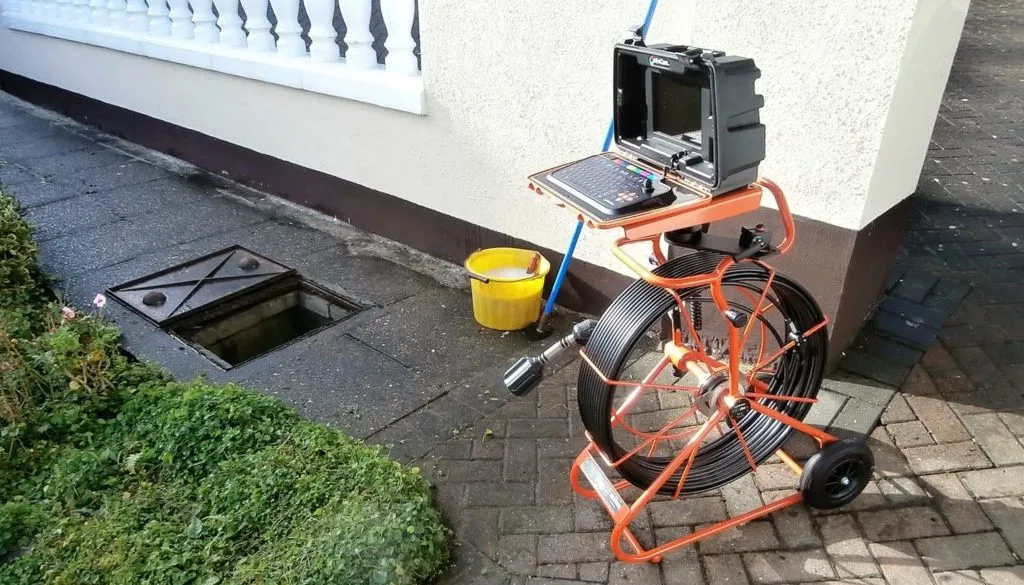
Most condition surveys need a clean pipe, because a camera cannot see through grease, silt or standing water. But for a suspected collapse, a pre-purchase survey or an insurance claim, the camera should go in first. Here is how to decide the order.
Usually, yes: a drain should be cleaned before a CCTV survey if the aim is to see the condition of the pipe itself, because a camera cannot see through grease, silt or standing water. There are three situations where the camera should go in first, before any jetting: a suspected collapse, a pre-purchase survey where you want the drain recorded as it is, and an insurance claim where the cause of the damage has to be shown. The right order depends on what question the survey has to answer.
Jet first or survey first: which order is right?
For a condition survey, clean first and survey second. For evidence of cause, or where jetting could make a defect worse, survey first and clean afterwards, then survey again if needed.
The confusion comes from treating a CCTV survey as one product. It is really a recording of whatever the pipe looks like at the moment the camera passes through it. If the pipe is coated in fat or half full of silt, the recording shows fat and silt. That can be exactly what you need, or it can hide exactly what you need, depending on why you asked for the survey in the first place.
| Purpose of the survey | Usual order | Why |
|---|---|---|
| Condition survey before relining or repair | Jet, then survey | The pipe wall, joints and connections must be visible to be measured and coded. |
| Recurring blockage | Clear, then survey | The cause usually sits behind the blockage and only shows once flow is restored. |
| Suspected collapse | Survey, then decide | Jetting into a broken pipe can wash soil into it and enlarge the void. |
| Pre-purchase survey | Survey as found, clean only if the view is blocked | Deposits and debris are part of the condition you are buying. |
| Insurance evidence | Survey first, then clean and re-survey | The state of the pipe before anyone works on it is part of the evidence. |
Why a camera needs a clean pipe
A drain camera records the inside surface of the pipe. Anything covering that surface covers the defects too.
Hairline cracks, open joints and small displacements are often only a few millimetres across. Under a film of grease or scale they disappear. Standing water hides the invert, the bottom of the pipe, which is where fractures, sags and debris most often sit. A report written from a dirty run can end up coding "deposits" and "water level" all the way along and saying very little about the structure, which is the part that decides whether you need a repair.
That is why a survey ahead of relining or patch repair almost always follows a clean. The contractor needs to measure defects accurately, confirm the pipe diameter and see every lateral connection before anything is specified. Our high-pressure drain jetting service is run on that basis, with the camera used before and after so the cleaning itself is documented.
When the camera should go in before any jetting
Survey first when jetting might damage the pipe, or when the uncleaned state of the pipe is itself the evidence.
- Suspected collapse. A dip or hole in the ground over a drain run, a chamber that has dropped, or rats appearing where there were none. Water at pressure into a broken pipe can scour out the surrounding ground. A partial view is better than a bigger hole. Our guide on how to tell if a drain has collapsed covers the signs and how a survey confirms it.
- Fragile pipe materials. Pitch fibre pipes, common in some post-war housing, can blister and deform. Old, badly fractured clay can have loose pieces. A look first lets the engineer choose a gentler cleaning method or lower pressure.
- Pre-purchase surveys. Heavy fat, scale or silt is a finding in its own right. A drain that has been jetted the morning before a buyer's survey tells the buyer less about how it has been maintained.
- Insurance claims. The insurer or loss adjuster will want to know what the pipe looked like before anyone worked on it. Jetting first can remove root masses, debris and displaced material that help show what happened.
The survey, jet, survey sequence
Where both the "as found" state and the underlying structure matter, the answer is to survey, clean, and survey again.
The first pass records deposits, roots, water levels and anything that looks like a sudden failure. The run is then jetted, and the second pass records the pipe wall, joints and connections clearly. Both recordings go into the report, with each observation measured from the same access point so they can be compared directly. It takes longer than a single pass and costs more, but for an insurance claim or a disputed shared drain it is usually the version that answers the questions people actually ask. Our guide to reading a CCTV drain survey report explains how the codes from each pass appear on the page.
What jetting cannot fix, and what the survey then shows
Jetting removes material from inside the pipe. It does not move pipes, close joints or straighten a sag, and a survey after cleaning is how you find out which of those you are dealing with.
If a drain keeps blocking after it has been jetted, the cause is usually structural: a displaced joint that catches paper, a branch connection that pokes into the main run, a section that has dropped and holds water, or roots that have come back through an open joint. None of those show clearly until the pipe is clean. That is the strongest argument for jetting before a condition survey: it separates the cleaning problem from the structural one, so you do not pay to reline a pipe that only needed cleaning, or keep paying to jet a pipe that needs repair.
How to tell if your survey was done on a clean pipe
A good report says so. Look for the water level recorded along each run, the deposit codes, and any note that a run was abandoned or only partly surveyed.
- Water level recorded as a percentage of the pipe diameter. Consistently high readings mean parts of the invert were not visible.
- Deposit codes along long stretches of the run, without much else coded, suggest the pipe was surveyed dirty.
- Survey abandoned notes, with a reason such as an obstruction, a blockage or a collapse. A run that stopped short has not been fully inspected.
- A statement of whether cleaning was carried out, and if so, before or after which pass.
If those are missing and you need the report for a repair decision, a sale or a claim, ask before you rely on it. The CCTV drain survey page sets out what we record as standard.
Frequently asked questions
Can you do a CCTV drain survey on a blocked drain?
Only partly. The camera can usually reach the blockage and record what is in front of it, but it cannot see past it or through standing water. For a full condition survey the drain is normally cleared first, unless a collapse is suspected, in which case a partial view before any jetting is the safer option.
Does jetting damage old drains?
Jetting at the right pressure with the right nozzle is safe for sound pipework. It can make things worse in a pipe that has already collapsed, in badly fractured clay, or in deformed pitch fibre pipes. That is why an engineer who suspects a fragile or broken pipe should look with the camera before jetting.
Should the seller jet the drains before a buyer's drain survey?
It is better for the buyer if the drains are surveyed as found. Heavy fat, silt or scale is part of the condition of the drains, and cleaning them just before the survey removes that evidence. If a run is too fouled to see the pipe, the surveyor can clean it and record that they did.