How to Tell If a Drain Has Collapsed (and How a Survey Confirms It)
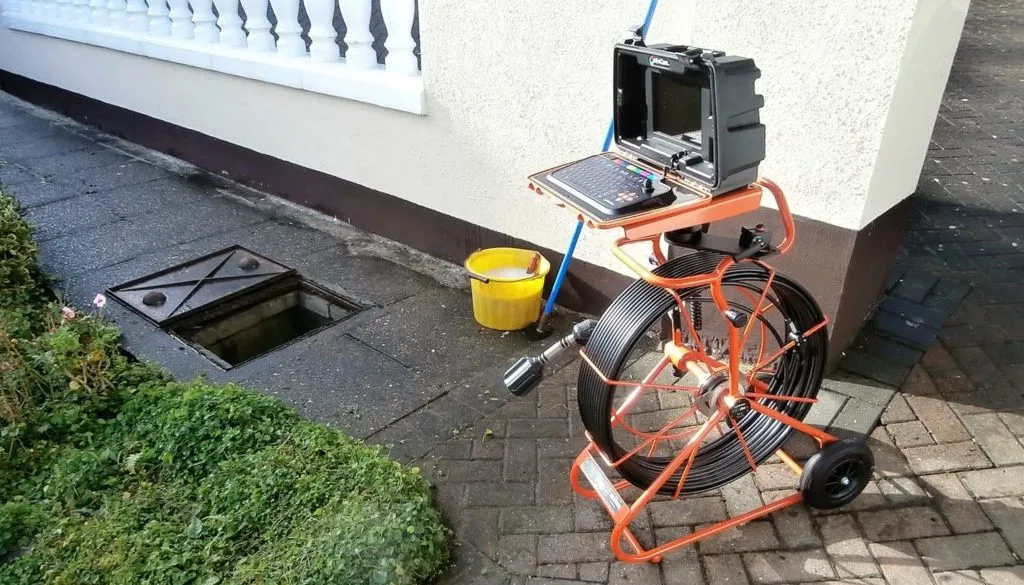
Repeat blockages in the same spot, water standing in the lowest chamber and sinking ground over the drain run all point to a collapse, but only a camera proves it. Here is how a survey confirms a collapsed drain and pinpoints it.
You can suspect a collapsed drain from the symptoms, but you can only confirm one by looking inside the pipe. Repeated blockages in the same place, water backing up in the lowest gully or chamber, a patch of ground that keeps sinking over the drain run and a persistent drain smell outside are the usual warning signs. A CCTV camera survey is what tells you whether the pipe has actually collapsed, exactly where, and how deep it is.
What are the signs of a collapsed drain?
The most telling sign is a blockage that keeps coming back at the same point, however often it is cleared. Clearance removes whatever has built up, but it cannot fix a pipe that has lost its shape, so the next load of paper or fat catches in the same place.
Other signs that point towards a structural problem rather than an ordinary blockage:
- Every outlet drains slowly, not just one sink or shower, and the problem is worse after heavy use or rain.
- Water stands in the lowest outside gully or inspection chamber while the next chamber downstream is empty or nearly so.
- Ground over the drain run sinks or softens: a dip in the lawn, a paving slab that rocks, or a hollow that reappears after it has been filled.
- A drain smell outside that does not go away, or damp soil along the line of the pipe.
- Rats in the garden or the house, which can get in through broken pipework.
None of these proves a collapse on its own. A slow drain is far more often a partial blockage, and a sunken patch can come from a badly backfilled trench. They are reasons to look inside the pipe, not to start digging.
How a CCTV survey confirms a collapse
A camera is pushed or driven along the drain from an inspection chamber and records the pipe's condition, with the distance from the chamber shown on screen. If the drain has collapsed, the footage shows it directly: the pipe wall broken in, soil or rubble in the bore, or the camera unable to pass.
A survey report describes defects with standard codes and gives each length a structural grade from 1 to 5. A collapse is the most serious structural defect and carries the top grade. Nearby, the report may also record fractures, broken pieces of pipe, holes, and a pipe that has deformed out of round; these often appear in the metres either side of the collapse and tell you how long the damaged section is. Our guide to reading a CCTV drain survey report explains the grades and codes in more detail.
When the camera cannot get past the collapse, the surveyor should try the other end: from the next chamber downstream, or from the upstream side. Surveying from both directions measures the damaged length, which matters because it decides how big any repair will be.
Why it matters exactly where the collapse is
Knowing that a drain has collapsed is only half the answer. The other half is its position and depth, because these decide how much digging is involved and who is responsible for the repair.
A sonde, a small radio transmitter carried on the camera head, is stopped at the defect and located from above with a receiver. That gives a mark on the ground and a depth reading, so any excavation can be one small, well-placed hole rather than a long trench. It also shows whether the damage is under a wall, an extension, a tree or the public pavement, which changes both the method and the cost.
Position also settles responsibility. If the collapsed pipe serves only your property and lies within your boundary, it is normally yours to repair. If it is part of a lateral drain outside your boundary, or a sewer shared with neighbours, it is normally the water company's. A survey that shows the defect beyond your boundary, measured from your chamber, is the evidence the water company will want to see.
Should a drain you think has collapsed be jetted first?
Not before someone has looked. High-pressure water forced through a broken pipe can wash surrounding soil into the drain, enlarge the void around it and make a partial collapse worse.
If the drain is blocked and there is sewage backing up, a careful clearance to restore flow may be needed first, but it should be done with the possibility of a structural failure in mind, and the camera should go in as soon as the pipe is clear enough to see. We cover the balance between clearing and inspecting in whether a drain should be jetted before a CCTV survey.
Collapse or something that looks like one?
Several common faults cause the same symptoms as a collapse and are much cheaper to deal with. The survey is what separates them.
- Tree roots entering through joints can fill a pipe so completely that the camera stops, but the pipe itself may still be sound once the roots are cut back.
- Displaced joints, where one length of pipe has moved relative to the next, catch debris and cause repeat blockages without the pipe being broken.
- Fat, scale or silt building up on the pipe wall can narrow the bore to the point that it behaves like a collapse.
- Deformed plastic or pitch fibre pipe that has lost its round shape without breaking needs a different repair from a collapsed clay pipe.
This is why a quote to dig up and replace a drain without footage showing the defect is worth questioning. Ask to see the video, with the distance marked, before agreeing to excavation.
What happens after a collapse is confirmed?
The repair depends on how much of the pipe has failed and where it is. A short, fully collapsed section is usually excavated and replaced, because a liner needs an open pipe to pass through and to hold its shape against.
Where the pipe is cracked, fractured or partly deformed but still open, a no-dig repair such as a patch or full-length liner may be possible, and a good survey report will say which sections suit which method. Once the repair is done, a second camera run records the finished work, which is the evidence you want for an insurer, a buyer's surveyor or a future dispute. Our drain repair and excavation service works from the survey footage and sonde marks, so the excavation is sized to the damage rather than guessed.
If the collapse was caused by something sudden, such as a vehicle on the drive, building work or a burst water main, your buildings insurance may cover it. Gradual deterioration generally is not covered. The survey report and footage are what an insurer will ask for either way.
Frequently asked questions
Can a collapsed drain be unblocked?
It can sometimes be cleared enough to restore flow for a while, but clearance cannot fix a pipe that has broken in, so the blockage comes back. Jetting a collapsed pipe can also wash soil into it and make the damage worse, so the drain should be inspected with a camera before or as soon as flow is restored.
Who pays to repair a collapsed drain?
If the collapsed pipe serves only your property and lies within your boundary, it is normally yours to repair. If it is a lateral drain outside your boundary or a sewer shared with neighbours, it is normally the water company's. Buildings insurance may cover a collapse caused by a sudden event, but not gradual wear.
Can a collapsed drain be relined?
Usually not where the pipe has fully collapsed, because a liner needs an open pipe to pass through and hold its shape against. A short collapsed section is normally dug out and replaced, while cracked or partly deformed sections either side may suit a no-dig liner. The survey footage shows which applies.