What Does a Drainage Surveyor Do, and How Do You Choose One?
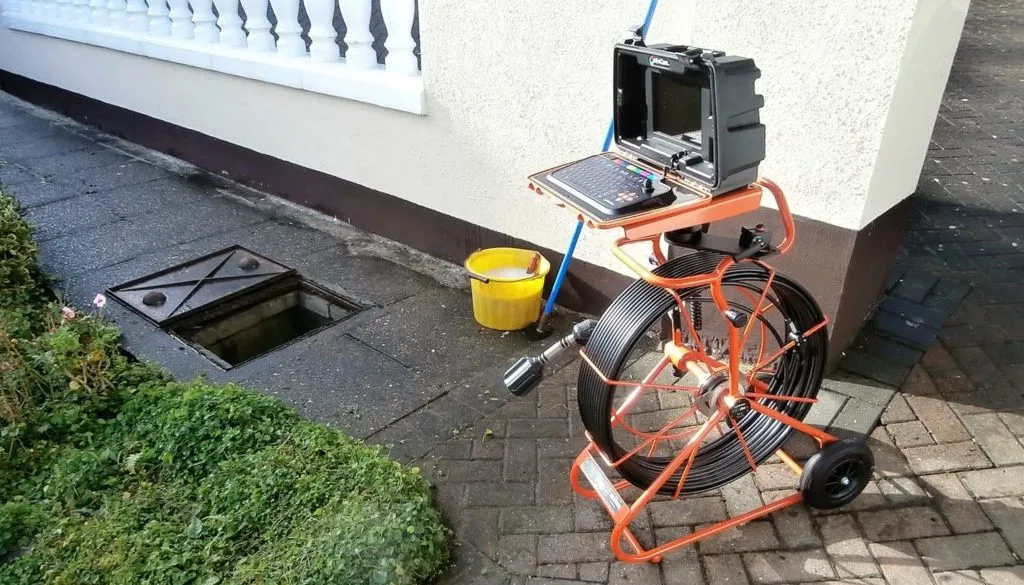
Most drainage surveys in London are done by drainage contractors with a camera, and there is no protected title. Here is what a drainage surveyor should actually do on site, the standard their report should follow, and when it is worth paying for an independent one.
A drainage surveyor inspects the underground pipes and chambers at a property, usually with a CCTV camera, and writes up what they find in a report that someone else can rely on. In practice most drainage surveys in London are carried out by drainage contractors with camera equipment, not by a separate profession, so choosing one comes down to three things: who will actually operate the camera and code the footage, what the report will contain, and whether the person surveying also stands to earn from the repair.
What does a drainage surveyor do?
A drainage surveyor finds out where the drains run, what condition they are in and what, if anything, needs doing. The camera work is only part of it; the useful product is a written record of each run with its defects located and described.
On a typical domestic survey the surveyor will:
- Lift the inspection chamber covers, note the depth, size and condition of each chamber and which pipes enter it.
- Push or crawl a CCTV camera along each run, recording distance from the start point as it goes.
- Stop at each defect, such as a crack, a displaced joint, root entry or a deformed section, and record its position and size.
- Use a sonde or dye where a run's route or destination is unclear, so the plan shows where pipes actually go.
- Code the defects to a recognised standard, grade each run and write up the findings with a drawing, still images and the footage.
The last step is the one people skip. Footage on its own tells you very little unless you know what you are watching, and it cannot be handed to a buyer, insurer or managing agent as evidence.
Is a drainage surveyor the same as a building surveyor?
No. A building surveyor looks at the whole property and will usually only lift accessible manhole covers and look down them. A drainage surveyor puts a camera into the pipes and reports on their internal condition.
This is why a homebuyer's report so often says something like "drains not inspected, further investigation recommended". The building surveyor has done their job; they are telling you that the pipes themselves need a specialist. The same applies to a structural engineer looking at cracking: they may suspect a leaking drain, but they will want a CCTV survey to confirm it.
There is also no protected job title here. Anyone can call themselves a drainage surveyor, and most people doing the work describe themselves as CCTV operators or drainage engineers. That makes the questions you ask before booking more important than the title on the van.
What training and standards should a drainage surveyor work to?
The important point is that defects are coded to a published standard, not described in the surveyor's own words. In the UK that means the WRc Manual of Sewer Condition Classification (MSCC), which follows the European coding standard BS EN 13508-2.
Coding to MSCC matters for two reasons. First, it makes the report readable by someone who was not there: a relining contractor, an insurer's loss adjuster or a buyer's solicitor can see exactly what was found and where. Second, it removes a lot of room for exaggeration. "Severe damage" is an opinion; a coded fracture at a given distance with a given structural grade is something another surveyor can check against the footage.
When you ask about competence, ask about the person, not the company. Useful questions are:
- Who will operate the camera, and have they been trained in MSCC coding?
- Will the report be coded and graded, or just described?
- Which software produces the report, and will the footage be linked to each coded defect?
A surveyor who works to MSCC will answer these without hesitation. If the answer is that the engineer "just explains what they see", you are buying a camera inspection, not a survey. Our guide to the difference between a drain camera inspection and a CCTV drain survey sets out when each is enough.
What should a drainage surveyor's report include?
A usable report shows every run surveyed, every defect found and where it is, in a form another professional can act on. If you cannot hand it to someone else and have them understand it without a phone call, it is not finished.
As a minimum, expect:
- A site drawing showing chambers, runs, direction of flow and the start and finish point of each survey.
- For each run: pipe material, diameter, length surveyed and whether the survey was completed or abandoned, and why.
- Each defect with its code, position in metres, clock reference and a still image.
- Structural and service grades for each run, with a plain explanation of what they mean.
- Recommendations kept separate from findings, so you can see what was observed and what is opinion.
- The footage, supplied with the report rather than held back.
If the report says a run could not be surveyed because it was blocked or a chamber was inaccessible, that is honest and useful, provided it is stated clearly. What you should not accept is a report that quietly leaves out part of the system. Our article on reading a CCTV drain survey report explains the grades and codes you are likely to see.
Should the surveyor also be the company that does the repair?
It can be, and often is, but you should know where the incentive sits. A firm that surveys and then quotes to repair has a reason to find work, so the coded footage is your protection: it lets someone else check whether the repair is justified.
For most homeowners with a clear problem, such as a recurring blockage or a collapsed section, using one firm for survey and repair is practical and saves a second visit. It becomes a problem when the survey is cheap or free and the repair quote is large, or when the report recommends relining an entire run for a single defect near one end.
An independent survey, where the surveyor is not quoting for the repair, is worth paying for when:
- You are buying a property and the seller's own contractor has done the survey.
- An insurer or loss adjuster is disputing the cause or extent of damage.
- You have a repair quote that seems out of proportion to what you were told.
- The dispute is heading towards court, in which case you need a report written for that purpose. Our guide to drainage expert witness reports explains how that differs from a survey report.
How to choose a drainage surveyor in London
Choose on the report you will get, not on the price of the visit. Ask to see a sample report before you book, and check it against the list above.
A few London-specific points are worth raising at the booking stage. Many terraced and semi-detached houses share a run with neighbours before it reaches the public sewer, so ask whether the surveyor will note where your private drain ends and the shared or public section begins. In flats and conversions, access to chambers may sit in a neighbour's garden or a communal area, so agree who arranges access. On older properties, ask whether the surveyor expects to meet pitch fibre or clay pipes and how they will record deformation.
Finally, ask what happens if the survey cannot be completed. A blocked run may need clearing first, and a sensible surveyor will explain that before the visit, not on the invoice. For what a full coded survey covers and how to book one, see our CCTV drain survey service.
When you do not need a drainage surveyor
If your drain is simply blocked and has not blocked before, you usually need it cleared, not surveyed. A survey earns its cost when there is a question only evidence can answer: why it keeps blocking, whether a pipe is damaged, where a run goes or who is responsible for it.
Equally, if all you need is to see whether a blockage has cleared, a quick camera look at the end of the job is enough. Save the full coded survey for decisions that involve money, liability or someone else reading the result.
Frequently asked questions
What qualifications does a drainage surveyor need?
There is no legally required qualification or protected title for drainage surveyors in the UK. What matters is that the person operating the camera is trained to code defects to the WRc Manual of Sewer Condition Classification (MSCC), and that the report is coded and graded rather than simply described. Ask who will do the survey and whether their report will follow MSCC.
Does a homebuyer survey check the drains?
Only on the surface. A building surveyor carrying out a homebuyer or building survey will usually lift accessible manhole covers and look into the chambers, but will not put a camera into the pipes. If the report recommends further investigation of the drains, that means a CCTV drain survey by a drainage specialist.
Should I use the same company for the drain survey and the repair?
You can, and for a straightforward fault it is often the practical choice. Make sure the survey is coded and the footage is supplied, so another contractor could check the findings. If the repair quote seems out of proportion to the defects shown, or the survey is for a purchase or insurance dispute, an independent survey is worth the extra cost.