Commercial CCTV Drain Survey: What Facilities Managers Should Ask For
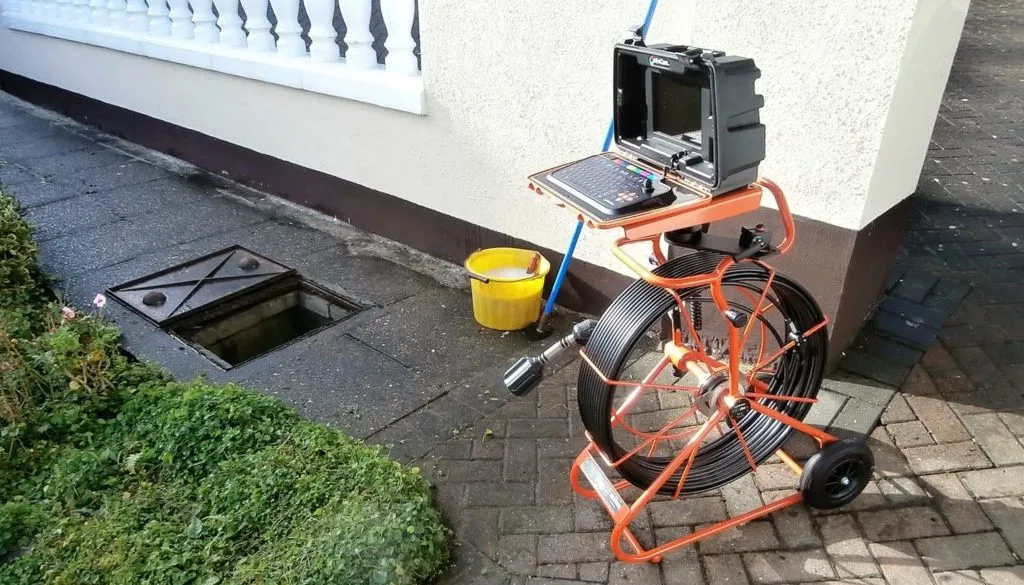
A commercial drain survey is judged by whether the report can run a maintenance budget, settle a lease dispute and satisfy an insurer. Here is what to specify before anyone lifts a cover.
A commercial CCTV drain survey uses the same camera as a domestic one, but the report has to do more work. It has to serve as an asset record, support budgeting and lease decisions, and stand up with insurers and landlords. For a facilities manager, managing agent or building owner, the value is decided mostly by what is specified before the survey starts.
How a commercial survey differs from a domestic one
The main differences are scale, access and audience. A commercial site has more runs, larger pipes, more chambers, sometimes deeper ones, and several parties who will read the report for different reasons.
A house might have three or four runs from a handful of chambers. An office block, retail unit, school or restaurant can have dozens, including surface water and foul systems, interceptors, grease traps, pumping stations and connections from neighbouring units. Larger diameters often call for a wheeled crawler camera rather than push rods. Deeper chambers can be confined spaces, which need planning under the Confined Spaces Regulations before anyone enters. And the report may be read by a landlord, a tenant, an insurer and a contractor, each needing something different from it.
Start with a drainage plan, not just footage
The most useful deliverable from a first commercial survey is an accurate drainage plan. Many buildings have no reliable drawing of their drains, and every later decision depends on knowing where the runs go.
A good plan shows every chamber with a unique reference, the direction of flow in each run, pipe diameters and materials, which runs are foul and which are surface water, where the private system connects to the public sewer, and anything that could not be surveyed and why. Where the route of a pipe cannot be seen from a chamber, it is traced from the surface with a sonde in the camera head. Our drain tracing service covers that part of the job.
If a plan already exists, the survey should check it rather than assume it is right. Extensions, fit-outs and changes of use regularly add connections that never made it onto a drawing.
What the report should contain
A commercial report should let someone who has never visited the site find each defect, understand how serious it is and see what is recommended. That means coded observations, graded runs and a clear summary of priorities.
- An executive summary listing the runs that need action, in order of priority.
- Per-run condition grades, structural and service, so repair and cleaning budgets can be separated.
- Coded defects with distances from a referenced chamber, using a recognised standard. Our reports use WRc-adopted coding.
- Stills at every significant defect and the full recordings, labelled by run.
- A clear ownership line showing where the private drainage meets the public sewer.
- Recommendations separated into cleaning, repair and monitoring, with the runs each applies to.
The difference between structural and service grades matters more on commercial sites, because it decides whether a cost is maintenance or capital expenditure. Our guide to reading a CCTV drain survey report explains both.
Access, permits and timing
Most of the planning for a commercial survey is about access. Agree when the work can happen, which chambers are in controlled areas, and whether any are on the public highway, before booking a date.
- Trading hours. Restaurants, shops and offices often need surveys early, late or at weekends, both to avoid disruption and to survey runs while flow is low.
- Flow control. A camera cannot see the bottom of a pipe running full. Busy sites may need water use restricted or flows diverted during the survey.
- Chambers in the highway or shared areas may need permission from the landlord, the neighbouring occupier or the highway authority.
- Kitchens and grease. Heavily fouled runs usually need jetting before a meaningful survey. A run surveyed through grease records deposits, not the pipe wall.
- Deep chambers. Entry needs gas monitoring and a rescue plan; many surveys avoid entry by using a crawler from the surface.
Commercial kitchens have their own drainage issues around grease traps and interceptors, covered on our grease trap servicing page.
Leases, dilapidations and insurers
On a let building, the survey is often as much about responsibility as condition. A baseline survey at the start of a lease, repeated at the end, is the clearest way to show whether the drains deteriorated during the term.
Many commercial leases put drainage repair on the tenant, subject to the condition at the start. Without a baseline report, both sides are arguing from memory at dilapidations. The same logic applies when a building changes hands, when a managing agent takes over a portfolio, or when an insurer asks whether a defect is new or long-standing. The chainage-referenced format is what makes two reports several years apart comparable.
For claims, the report needs to set out cause as well as condition. We cover that side on our drainage insurance claims page.
From one survey to a maintenance programme
A single survey tells you the condition today; a programme keeps that information current. For most commercial sites, the useful pattern is a full baseline survey, targeted repairs, then planned cleaning and periodic re-surveys of the runs that caused trouble.
The re-survey interval depends on the use. A kitchen run with grease loading needs looking at far more often than a surface water run from a roof. The baseline report is what lets you set those intervals from evidence rather than habit. If you want survey, cleaning and repair handled under one agreement, our commercial drainage contracts page explains how that works.
If a site has never been surveyed, start there. Any repair or maintenance plan written without a survey is based on guesswork.
Frequently asked questions
How long does a commercial CCTV drain survey take?
It depends on the number of runs, access and how much cleaning is needed first. A small retail unit may take part of a day; a large mixed-use building can take several visits. The report takes longer to produce than the fieldwork, because every run has to be coded, graded and plotted on the plan.
Do we need to close the building for a drain survey?
Rarely. Most commercial surveys are scheduled around trading hours, with water use restricted on the runs being surveyed at the time. Kitchens and busy toilet blocks are usually surveyed out of hours, both to avoid disruption and so the camera can see the pipe rather than a full flow of water.
Who should commission the survey on a let building?
Whoever carries the repair obligation under the lease, although landlords often commission a baseline survey at the start of a term to protect themselves at dilapidations. Either way, both parties benefit from having the same report, with a clear line showing where the private drainage ends and the public sewer begins.