No-Dig Drain Repair vs Excavation: A CCTV Survey-Led Guide to the Right Choice
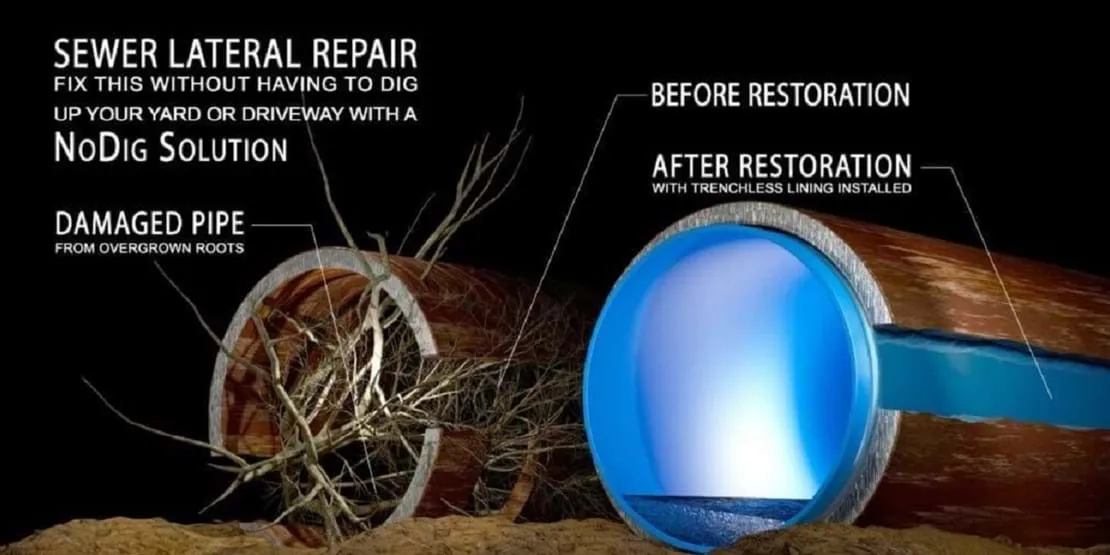
Choosing between no-dig repair and excavation requires a precise diagnosis. We detail how CCTV survey evidence guides this critical decision.
The Diagnostic Imperative: CCTV Survey First
Deciding between no-dig (trenchless) repair and traditional excavation is not a matter of preference but of precise diagnosis. Our process always begins with a comprehensive CCTV drain survey. This procedure involves inserting a flexible, high-resolution camera into your drainage system to record a full visual inspection. The resulting footage provides documented evidence of the issue's exact location, nature, and severity. Without this diagnostic data, any recommendation is merely speculative.
The CCTV report is our definitive guide. It allows us to map the defect—be it a root intrusion, a displaced joint, a partial collapse, or heavy scaling—and assess its suitability for either repair methodology. This evidence-based approach ensures the solution is tailored to the problem, not the other way around.
When No-Dig Drain Repair Is the Documented Solution
No-dig techniques, such as pipe relining or patch repairs, are engineered solutions applied from within the pipe. They are the indicated course of action when our CCTV survey confirms specific, localised conditions. Key candidates for trenchless repair include pipes suffering from cracks, holes, or joint failures where the structural integrity of the surrounding pipe wall remains largely intact. The pipe must also be clear of major obstructions and significant deformation to allow for the proper installation of the liner.
The procedural advantage of relining is its minimal invasiveness. Our engineers access the system via existing manholes or a small excavation at the access point, then insert and cure a resin-saturated liner. This creates a new, jointless pipe within the old one. The documented evidence—post-repair CCTV footage—shows a fully sealed, restored bore. This method is right when the diagnostic data confirms the defect is containable and the host pipe is a suitable candidate.
When Excavation Is the Necessary Procedure
Despite the advantages of no-dig methods, our CCTV surveys sometimes reveal conditions that necessitate excavation. This is the procedurally correct path when the diagnostic evidence shows a complete structural failure. Scenarios include a fully collapsed pipe section, severe deformation (like a pipe crushed by external pressure), or extensive multiple failures over a long, contiguous run where relining would be impractical or uneconomical.
Excavation is also the definitive solution for problems outside the pipe itself, such as a failed underground junction or a root mass that has catastrophically compromised the pipe's foundation. The decision to excavate is data-led: the CCTV evidence clearly shows the limits of an internal repair. While more disruptive, it allows for a complete visual inspection of the surrounding ground and a full replacement of the failed section, with the new installation itself documented before backfill.
Making the Evidence-Based Decision
The choice between these methods flows directly from the survey findings. Our role is to present the documented evidence—the CCTV footage, the defect report, the pipe condition assessment—and explain the technical rationale for each recommended procedure. For a localised fracture in an otherwise sound clay pipe at a depth of two metres, the evidence strongly supports a no-dig patch repair. For a terracotta pipe found to be shattered and displaced over three metres, the evidence dictates excavation and replacement.
Grounding this decision in diagnostic credibility protects your property from unnecessary disruption and ensures a lasting repair. We proceed only once the diagnostic phase is complete and the correct path, based on the physical evidence recorded, is established.
Frequently asked questions
Do you always need a CCTV survey to decide?
Yes, for a credible diagnosis. Recommending no-dig repair or excavation without CCTV evidence is guesswork. The survey provides the visual documentation required to assess the defect type, location, and severity accurately.
Can a severely blocked drain be fixed with no-dig methods?
Not immediately. No-dig repair requires a clear and clean pipe channel for the liner installation. Our engineers would first need to clear the blockage via jetting or other means, then conduct a post-clearance CCTV survey to assess the pipe's condition and determine if relining is suitable for any damage found.
How do you prove the repair was successful?
We document the entire process. For a no-dig repair, we provide before-and-after CCTV footage showing the defect sealed by the new liner. For an excavation, we can document the replaced section before backfill. This procedural documentation is your evidence of a correct, completed repair.