Fatbergs Explained: What They Are and How to Prevent One
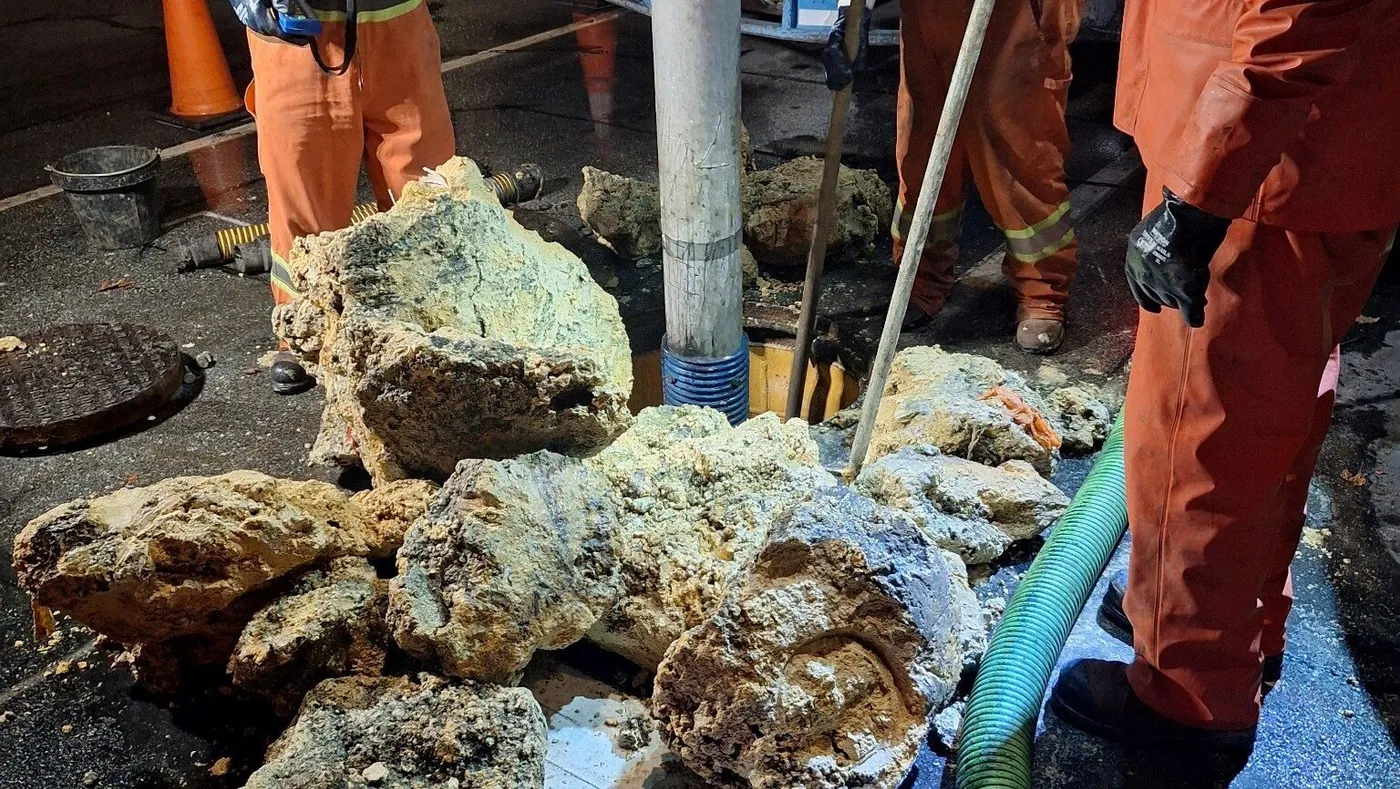
A fatberg is a congealed mass of FOG (fats, oils, greases) and non-biodegradable waste that blocks sewers and drains. We explain their formation and how to prevent them.
A fatberg is a dense, rock-like blockage formed within a sewer or drainage system. It is not simply a clog of grease; it is a complex amalgamation of FOG (Fats, Oils, and Grease) that has solidified, binding with non-biodegradable sanitary products like wet wipes, cotton buds, and other flushed debris. This mass adheres to pipe walls, accumulating over time until it causes a complete restriction of flow, leading to backups, overflows, and significant structural damage.
The Formation Process: A Diagnostic Perspective
From a diagnostic standpoint, understanding fatberg formation is key to prevention. The process begins when liquid FOG is poured down sinks or drains. As this wastewater cools within the underground pipes, the fats and greases solidify into a coating on the pipe's interior. This sticky layer then acts as a net, capturing passing solids like wet wipes, which are falsely marketed as 'flushable'. Layer upon layer accumulates, with the mass hardening through a process called saponification, where fats react with calcium in the water to form a concrete-like substance.
Our engineers identify these formations through systematic CCTV drain surveys. The survey provides documented, visual evidence of the initial grease coating, the progressive accumulation, and the ultimate reduction in pipe bore. This evidence is critical, as it differentiates a simple clog from a developing fatberg, which requires a specific and often more intensive remediation strategy.
Prevention: A Procedural Approach
Preventing fatbergs is a matter of rigorous procedure, both for property owners and our drainage specialists. The cornerstone of prevention is ensuring that only the 'Three Ps' (Pee, Poo, and Paper) are flushed, and that all FOG is diverted from the wastewater stream.
We advise a strict kitchen protocol: all cooking fats, oils, and greases should be collected in a container, allowed to solidify, and disposed of with general waste. Sink strainers should be used to catch food scraps. Furthermore, we recommend that businesses in the hospitality sector install and maintain correctly sized grease traps or interceptors, which require a scheduled service plan to empty and clean.
For comprehensive protection, a proactive diagnostic schedule is essential. Regular CCTV drain surveys, even in the absence of active problems, allow our engineers to monitor pipe conditions. They can identify the early-stage accumulation of FOG residues and recommend targeted high-pressure water jetting to remove them before they can develop into a full fatberg, ultimately preventing more costly and disruptive emergency interventions.
The Role of Professional Diagnosis and Clearance
When a suspected fatberg causes a blockage, professional diagnosis is non-negotiable. Our response follows a strict procedural axis: first, a high-resolution CCTV survey is conducted to assess the blockage's location, size, and composition. This survey provides the evidential basis for the clearance method.
Fatberg clearance typically requires a combination of techniques. High-pressure water jetting may break down softer sections, but hardened masses often necessitate specialist cutting and extraction tools, sometimes requiring manual removal by confined-space-trained technicians. Throughout the process, CCTV documentation continues, providing before-and-after evidence to confirm the blockage's complete removal and verify the structural integrity of the cleaned pipe.
Frequently asked questions
Can a fatberg form in my home's drains, or is it only a sewer problem?
While large fatbergs are typically found in public sewers, the same process occurs on a smaller scale in private drainage systems. Grease accumulation in kitchen waste pipes and lateral drains connecting your property to the main sewer can create significant blockages. A CCTV survey of your private drains can diagnose this early-stage formation.
How does a CCTV drain survey confirm a fatberg versus another type of blockage?
Our CCTV surveys provide visual, recorded evidence. A fatberg has a distinct, irregular, and often layered appearance, typically showing a mix of congealed material and entangled non-flushables. This differs from the uniform appearance of a root intrusion or a simple collapse. The survey footage allows us to analyse the blockage's composition and plan the precise removal method.
What is the most effective long-term strategy to prevent fatbergs?
The most effective strategy is a combination of strict behavioural changes—never flushing wipes or pouring FOG down drains—and proactive drainage maintenance. We recommend scheduled preventative cleaning, such as jetting, informed by periodic CCTV condition surveys. This diagnostic approach identifies and addresses grease build-up before it can solidify and combine with other debris to form a fatberg.